









A dog that scratches all the time usually has parasites, a skin infection, or an allergy.
Fleas and mites belong at the top of the checklist because they are common and easy to miss.
If the scratching persists, or the skin looks red, raw, or flaky, see a vet.
What do scratching patterns mean?
Timing and location narrow the list before any test is run.
Notice where your dog scratches and whether it changes with the seasons.
| Pattern | What it often suggests |
|---|---|
| Black specks in the coat | Flea dirt or flea presence |
| Itch all year, worse indoors | Household or food allergy |
| Itch that returns each spring or fall | Seasonal allergy |
| Odor or crusty skin | Possible skin infection |
| Itch on the belly, armpits, or ears | Allergy or yeast |
What are the common causes, in order?
Vets usually check for parasites first, then infections, then allergies.
That order is practical, because parasites need to be ruled in or out.
Merck's guide to itching in dogs covers these categories.
Its flea allergy dermatitis guide explains why a few bites can cause intense itch.
- Fleas, mites, and other parasites
- Bacterial or yeast skin infections
- Environmental or food allergies
- Dry skin or irritation from grooming products
What should you check at home first?
- Part the coat and look for fleas or flea dirt
- Check the belly, armpits, and ears for redness
- Confirm your parasite control is up to date
- Note any new food, snack, shampoo, or outdoor exposure
- Take photos of the skin each day
Is the itch seasonal or year-round?
Seasonal itch often follows pollen, grass, or weather, and it tends to return at the same time each year.
Year-round itch is more often linked to food, household allergens, or parasites.
Either way, a written log helps your vet sort out the pattern.
What should you log for the vet?
Write down when the scratching starts, when it is worst, and what changed at home or in the diet.
List every product you have tried on the skin, and bring photos of any changes.
How Plentum fits
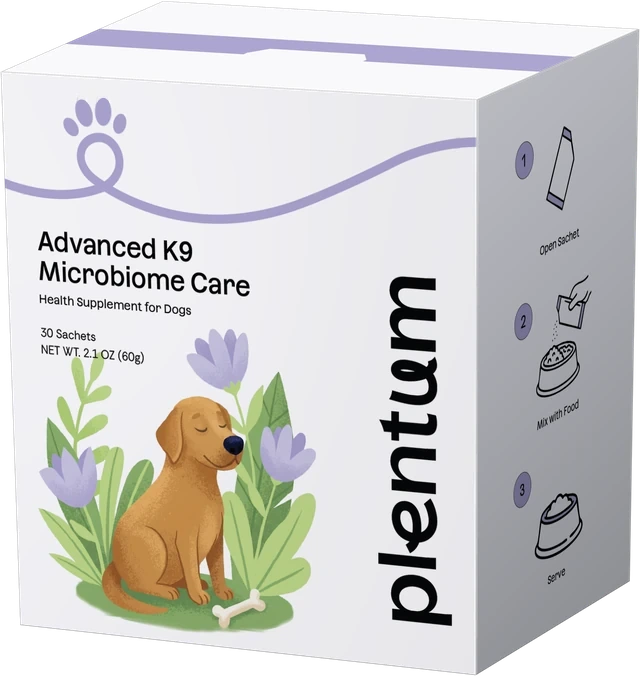
Plentum Advanced K9 Itch & Immune Care supports a normal immune response to seasonal triggers and healthy skin and coat.
It is meant for daily support, and it is not a substitute for a parasite check or a vet exam.
Itch & Immune Care is vet formulated, and every lot is lab-tested.
Dosing is by weight, from 1 to 4 sachets a day.
When should you call the vet?
- Open sores, bleeding, or crusting that spreads
- Bad odor, pus, or heat in the skin
- Hair loss in patches, or scratching that wakes your dog
- Itching that continues after a home check
- Fever, lethargy, or loss of appetite
- A puppy, a senior dog, or a dog with other health issues
Call your vet sooner if your dog is in pain or the skin breaks open.
Our dog itch, paws, skin, and ears guide covers the full picture.
For related patterns, see ear scratching and head shaking and dog hot spots.
Sources
Frequently asked questions
Is constant scratching always an allergy?
No.
Parasites and skin infections cause many cases, so a vet should check for them before deciding an allergy is the cause.
Can I use a human anti-itch cream on my dog?
Do not use human creams without checking with a vet first.
Human products can irritate the skin or be unsafe if your dog licks them off.
How soon should I see a vet for itching?
See a vet sooner if the skin is broken, smells, or your dog seems unwell.
Persistent itching also needs an exam.