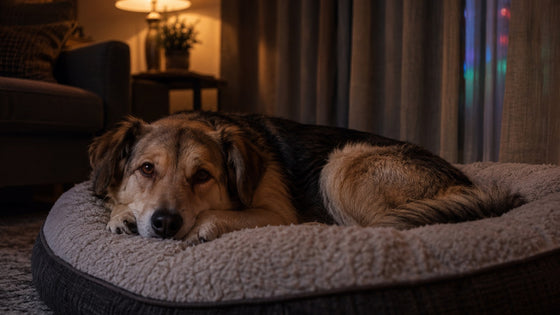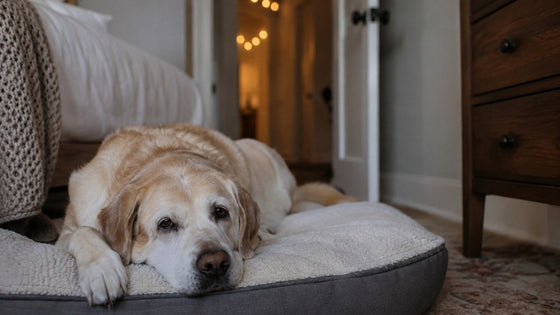










Your dog is shaking before thunder starts, and you want to help. Begin with the forecast or their first signs.
Offer a familiar quiet spot, close the curtains, and stay nearby if they want company.
Why some dogs know a storm is coming hours ahead
Some dogs react before you hear thunder.
A storm brings changing sights, sounds, and other cues that may predict an unpleasant experience.
You do not need to identify the exact cue to act.
Start preparing when bad weather is forecast, and watch your own dog’s behavior.
Cornell’s noise-fear guidance supports planning ahead.
A storm routine that starts with the forecast
Use a familiar sequence so you have fewer decisions to make when the weather turns.
| When | What you do |
|---|---|
| Storm in the forecast | Walk or play before the weather turns. |
| First signs in your dog | Offer the quiet spot, curtains, and steady background sound. |
| An hour before | Offer dinner and a last potty trip on leash |
| During the storm | Stay nearby; offer a familiar food toy if wanted. |
| After it passes | Wait until the weather is safe; use a leash. |
Offer calm company if your dog seeks it.
Let them choose whether to rest beside you or in their hiding place.
Make a storm spot your dog picks
Watch where your dog goes during a storm. Some choose a bathroom, closet, or space behind a couch.
Build a safe retreat around their preference, away from windows.

- Add a bed or crate with a blanket that smells like home.
- Cover the crate on 3 sides if your dog already likes it covered.
- Run a fan or white noise machine to soften the rumbles.
- Keep a water bowl and a chew there all season.
Leave the spot open all year so it's a normal part of the house, not only the storm room.
Never shut a panicking dog in a crate, since some dogs hurt themselves trying to get out.
Low-level arousal at home: the dog who never fully settles
Some dogs also pace, startle, or struggle to rest between storms.
Those signs can have several causes; they do not tell you by themselves that a dog needs a calming supplement.
A predictable routine can help. Cornell recommends consistency with meals, walks, play, and rest:
- Keep meals, walks, and bedtime at the same times each day.
- Offer a comfortable sniff walk appropriate for your dog.
- Offer a familiar food puzzle or another quiet activity.
- Build in a nap time in a quiet room, with the curtains half closed.
- Note when pacing or panting happens and share persistent changes with your vet.
Our daily routine guide and body language guide explain early stress signs.
Practice with storm sounds between seasons
Practice storm sounds between events, while your dog is comfortable. Start a recording at a barely noticeable volume.
Pair it with a meal or favorite chew, and increase the challenge gradually.
If your dog stops eating, stares at the speaker, or starts to pace, stop and lower the difficulty next time.
Recordings cannot reproduce every part of a storm, so keep the practical storm plan too.
When to bring in your vet
Ask your vet for a plan if fear is worsening or disrupts daily life.
Injuries, breathing trouble, collapse, or severe distress need urgent care.
Sudden pacing or panting also warrants an exam rather than an assumption that it is storm fear.
Calming Care is used daily according to its label.
Ask your vet before use with prescription medication, especially a monoamine oxidase inhibitor (MAOI).
Safe use in pregnant or breeding dogs has not been established.
Use the supplement comparison to compare options. Our stressful-events guide covers fireworks and visitors too.
Most storm-sensitive dogs need the first row, and the others add to it.
| Option | How it works | Best fit |
|---|---|---|
| Storm routine and safe spot | Same steps each storm, starting with the forecast | Every storm-sensitive dog |
| Daily calming support | Supports relaxed behavior through storm season | Occasional stress, alongside a routine |
| Vet behavior plan | Your vet sets training and prescription care | Panic, injury, or fear that grows each season |
Frequently asked questions
Why does my dog shake before thunder starts?
Your dog may respond to storm cues before you notice them.
Begin preparing with the forecast and note the first signs your dog shows.
What if my dog also paces on quiet days?
Keep notes on when it happens and arrange a vet exam if it persists or is new.
Changes in comfort or health can also affect behavior.
Should I let my dog hide during a storm?
Yes, if the place is safe.
Allow free access to a familiar quiet spot and offer company if your dog wants it.
Can I practice with thunder recordings?
Practice only at a volume your dog stays comfortable with, paired with something pleasant.
Stop if they show distress, and ask for professional guidance if needed.
Sources
- VCA Animal Hospitals. Anxiety in dogs. VCA Animal Hospitals
- ASPCA. Common dog behavior issues. ASPCA
- Merck Veterinary Manual. Dog owner resources. Merck Veterinary Manual
- Riemer S, et al. Therapy and prevention of noise fears in dogs, a review of the current evidence for practitioners. Animals. 2023. PubMed 38067015
- Salonen M, et al. Prevalence, comorbidity and breed differences in canine anxiety in 13,700 Finnish pet dogs. Sci Rep. 2020. PubMed 32139728