



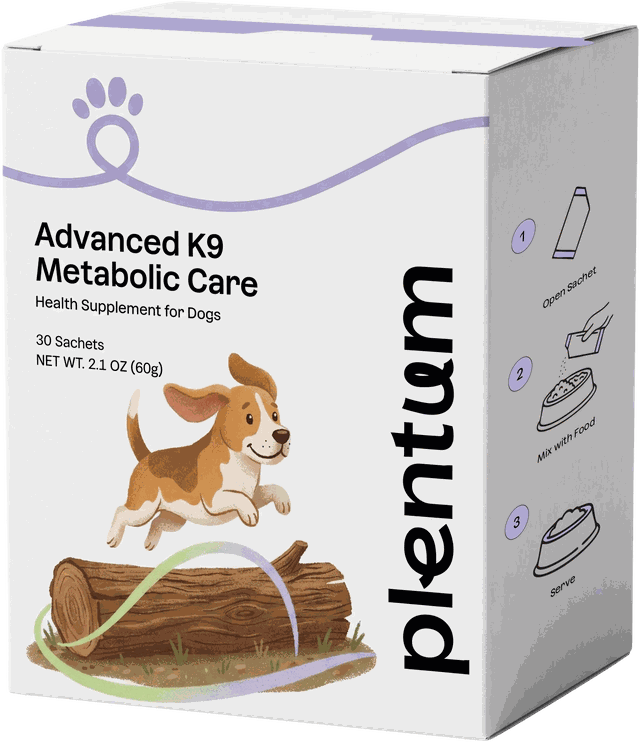


Your dog starts licking paws as leaves fall. Ragweed, leaf mold, and indoor allergens can contribute to seasonal itching.
What causes fall allergies in dogs?
Fall brings ragweed pollen, damp leaf mold and more time indoors with house dust mites.
In dogs that react to these, the result is itch: licking paws, rubbing the face, scratching ears and belly.
Start with home steps such as wiping paws and washing bedding. Nutrition, like omega-3, can support the skin over weeks.
Broken skin, ear trouble, or sleepless scratching needs a vet.
- Ragweed pollen runs from about August to November in much of the US.
- Paws, face, ears, front legs, and belly are the usual itch zones.
- Home steps come first. Nutrition is a slow, supporting add-on.
- Broken skin, ear odor, or hair loss means a vet visit.
Fall triggers
| Trigger | When | Where your dog meets it |
|---|---|---|
| Ragweed pollen | About August to November | Walks, fields, roadside weeds |
| Mold | Damp weeks, fallen leaves | Leaf piles, wet grass, basements |
| House dust mites | All year; more time indoors as it cools | Bedding, carpets, sofas |
| Fleas | Into fall in mild climates | Other animals, yards |
Fleas matter because flea bites can set off a flare in an allergic dog, whatever the season.
Signs to watch
- Licking or chewing the paws.
- Rubbing the face on the carpet or furniture.
- Scratching the ears or shaking the head.
- Scratching the belly, armpits or front legs.
- Red skin, or reddish-brown saliva stains on light fur.
Track it for two weeks. Tick each sign you see and note the date, the weather and where you walked.
A pattern that follows pollen days or leaf piles is useful to show your vet.
Home steps that help
- Wipe paws and belly with a damp cloth after walks.
- Wash bedding weekly in hot water.
- Bathe with a mild dog shampoo on the schedule your vet suggests.
- Keep flea control up to date.
- Skip leaf piles and long wet grass on high-pollen days.
- Vacuum sofas and rugs where your dog lies.
Dry, cracked pads are their own problem. See what to put on dry dog paws.

Where nutrition fits
Nutrition works slowly and supports the skin. It does not stop a flare.
Here is how the evidence stacks up for dogs.
| Nutrient | Evidence in dogs | Note |
|---|---|---|
| Omega-3 (EPA, DHA) | Some | Small placebo-controlled trials; takes weeks |
| Quercetin | Early | Mostly lab and human data; low absorption in dogs |
| Colostrum | Early | Limited dog data |
| Postbiotics and probiotics | Early | A few dog studies; results do not transfer between products |
Many owners start 3 to 4 weeks before their dog's usual season, because skin nutrients take time.
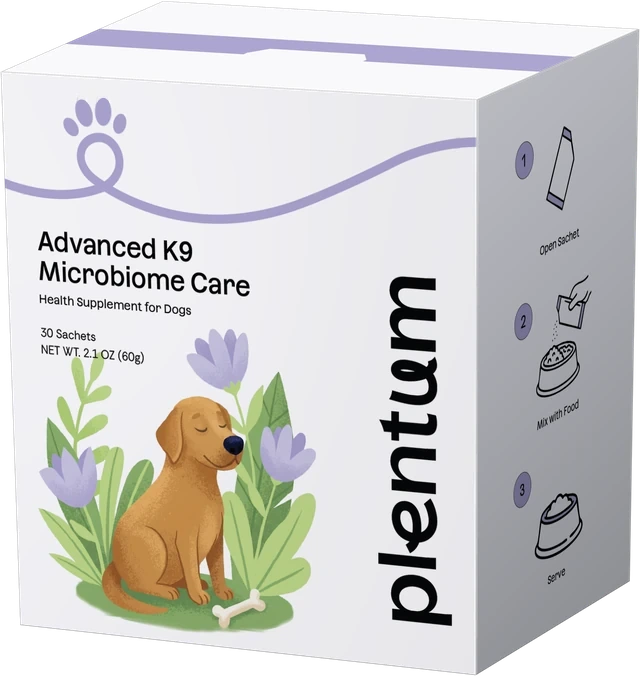
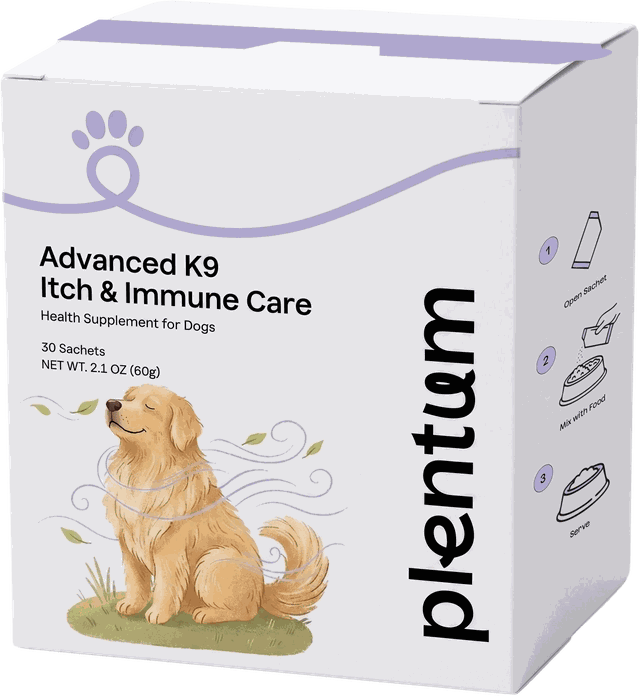
For the gut side, Itch & Immune Care pairs with Microbiome Care.
Our dog allergy supplement guide compares more options.
Our seasonal skin and coat guide covers home care during allergy season.
When to see the vet
- Broken, raw or weeping skin.
- Ear odor, discharge or constant head shaking.
- Hair loss or thickened, darker skin.
- Scratching that wakes your dog at night.
- Signs all year, or with loose stool, which can point to food.
Your vet can confirm what is going on and discuss prescription itch medicines, allergy testing or immunotherapy where they fit.
Home care, nutrition support and vet care
Each layer below does a different job, and many owners combine all three through the season.
| Option | How it works | Best fit |
|---|---|---|
| Home wipe and rinse routine | Remove pollen from paws and coat after walks | Helps most on high-pollen walk days |
| Daily nutrition support | Supports normal immune response and healthy skin | Builds over weeks across the season |
| Vet allergy plan | Diagnose triggers and set medical care with your vet | Fits ear trouble, hot spots or hair loss |
FAQ
Can I use dog seasonal allergy supplements regularly for better results?
Some nutrients need weeks of steady use. Ask your vet when to start for your dog's usual allergy season.
Do allergy supplements for dogs work?
Supplements may support skin and coat. They cannot replace vet care for an allergic flare.
Are there dog supplements that support skin and gut health together?
Some products combine gut and skin support. Itch & Immune Care includes DHA, colostrum, and a postbiotic.
Omega-3 vs quercetin-based allergy supplements for dogs: which is more effective?
Omega-3 has more dog research than quercetin. Ask your vet which fits your dog's needs.
What questions should I ask my veterinarian about a dog with both sensitive skin and a sensitive stomach?
Ask about food trials, flea control, and treatment compatibility. Bring dated photos of flare-ups.
Sources
- American College of Allergy, Asthma and Immunology. Seasonal allergies (ragweed season). acaai.org
- Merck Veterinary Manual (pet owner version). Allergies in dogs. merckvetmanual.com
- Olivry T, et al. Treatment of canine atopic dermatitis: 2015 updated guidelines from the International Committee on Allergic Diseases of Animals (ICADA). BMC Vet Res. 2015;11:210. PubMed 26276051
- Hensel P, et al. Canine atopic dermatitis: detailed guidelines for diagnosis and allergen identification. BMC Vet Res. 2015;11:196. PubMed 26260508
- Mueller RS, et al. Effect of omega-3 fatty acids on canine atopic dermatitis. J Small Anim Pract. 2004;45:293–297. PubMed 15206474
- Reinboth M, et al. Oral bioavailability of quercetin from different quercetin glycosides in dogs. Br J Nutr. 2010;104:198–203. PubMed 20230651