

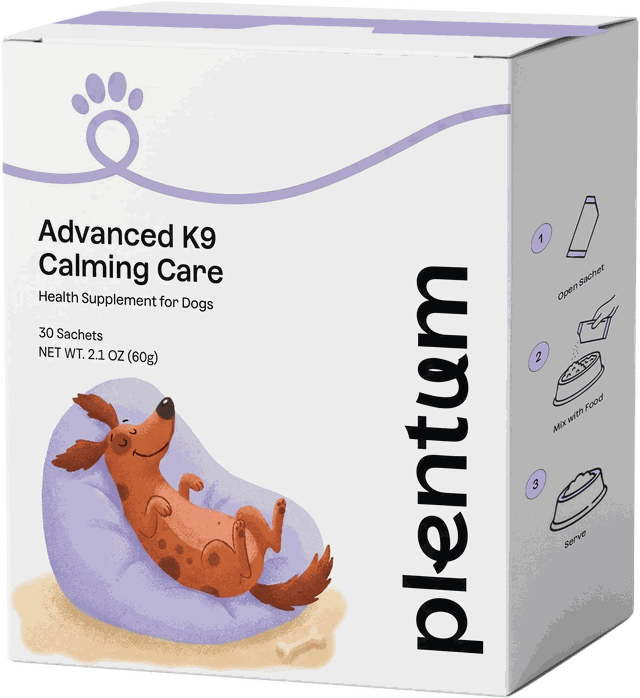

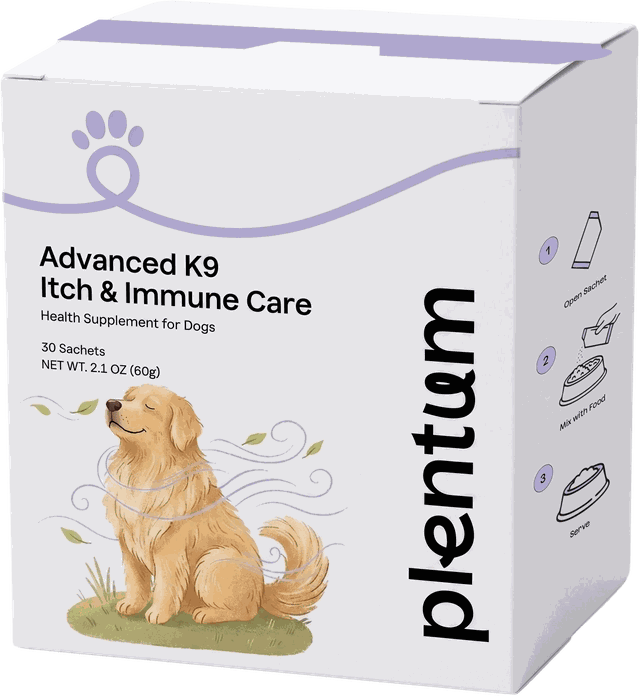

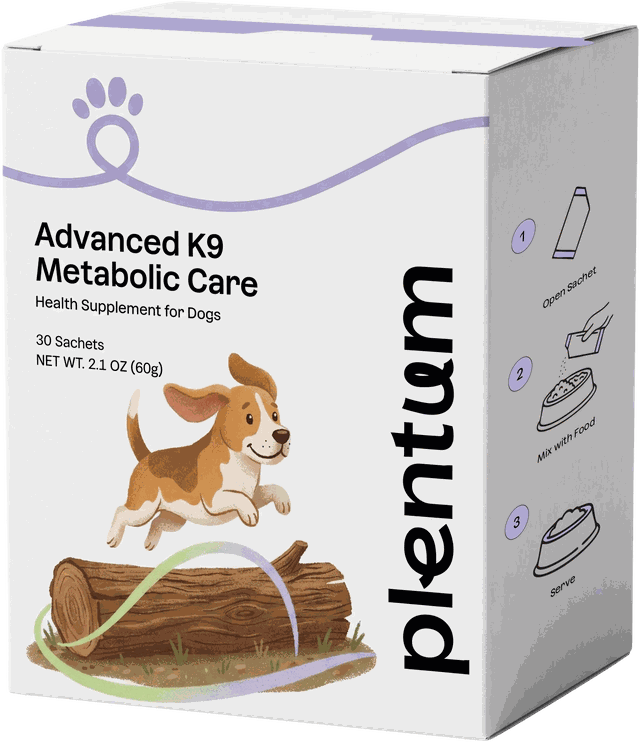


You want to understand the testing behind a supplement your dog eats daily.
Every lot of all five Plentum supplements is lab-tested.
This guide explains what the lab checks on every lot of our four new supplements, and what "tested" can and cannot mean.
Quick answer
Each lot has a Certificate of Analysis.
The report lists the tests performed, their limits, and the results.
- Every lot of the four new supplements is tested and ships with a Certificate of Analysis.
- The certificate identifies the laboratory and the tests performed.
- Every lot of every Plentum supplement is lab-tested, and each lot has a certificate of analysis that identifies the tests performed and their results.
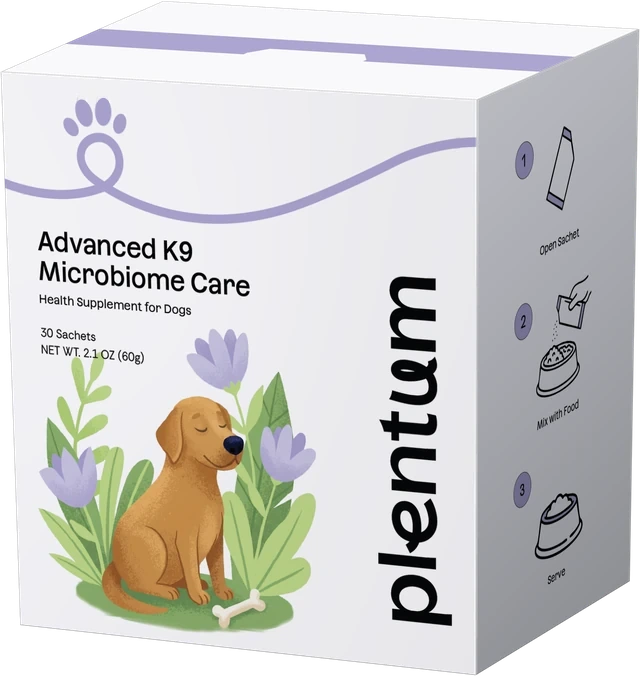
- Microbiome Care is made in the USA, with a Certificate of Analysis for each lot.
Why testing matters for a powder you feed every day
A supplement becomes part of your dog’s daily food.
Quality checks help you assess the product you choose.
Read the testing information alongside the ingredient list and serving directions.
It is one part of a bigger picture. This page covers the lab side.
"Tested" can mean very different things
Quality claims on supplements are easy to blur.
Here is what each word means, and what we say about ourselves.
| Term | What it means | Our position |
|---|---|---|
| Accredited lab | Assessed competence for specific tests | Check the accreditation scope for the specific tests. |
| Third-party lab | A laboratory independent of the maker. | Check the laboratory named on the certificate. |
| Certificate of Analysis | A report listing tests, limits, and results for one lot | Every lot of every Plentum supplement has one. |
| cGMP | Current Good Manufacturing Practices: rules for how a product is made. | Read the product’s quality records and testing information. |
| Quality mark | A mark awarded under a program’s own requirements. | Read the Certificate of Analysis for the test results. |
An accreditation body has assessed that a laboratory is competent to run specific tests (ISO/IEC 17025).
A lab report for one specific lot, showing each test against its limit.
The tests on every lot
| Test | What it checks | Limit |
|---|---|---|
| Salmonella | A germ that can make pets and people sick | Absent in a 25 g sample |
| E. coli | A gut bacterium; high counts can point to a hygiene problem | Under 10 CFU per gram |
| Total coliforms | A wider group of gut bacteria | 100 CFU per gram or less |
| Staphylococcus aureus | Another germ we keep out | Under 25 CFU per gram |
| Molds | Mold counts in the powder | 100 CFU per gram or less |
| Water activity | Available moisture in the powder | Under 0.30 aw |
| Live probiotic count | A count of live cultures in each lot | Checked against a minimum |
| Appearance, color, odor | Checked by eye and nose | A fine, free-flowing beige powder |
How dry the powder is; less free moisture means less for anything to grow on
The methods are the standard ones used for food testing, and they are named on each certificate.
Many come from the Health Canada Compendium of Analytical Methods.
What a Certificate of Analysis is
A Certificate of Analysis, or CoA, is a one-page lab report for one lot.
It lists each test, its limit, and the result.
Our quality and testing page shows first-lot results, so you can see the format and the numbers.

From one lot to your dog's bowl
- Lot madeOne production run of a supplement
- Sample testedThe lab checks the microbial panel
- CoA issuedEach test, limit and result is listed
- Directions checkedUse the directions printed on the supplement you choose
- ShippedRead the certificate and label before serving
How do you check sachet serving directions?
Serving directions specify the number of sachets for your dog’s weight.
Use the directions printed on the supplement you choose. Check the label before each serving.
Where are the supplements made?
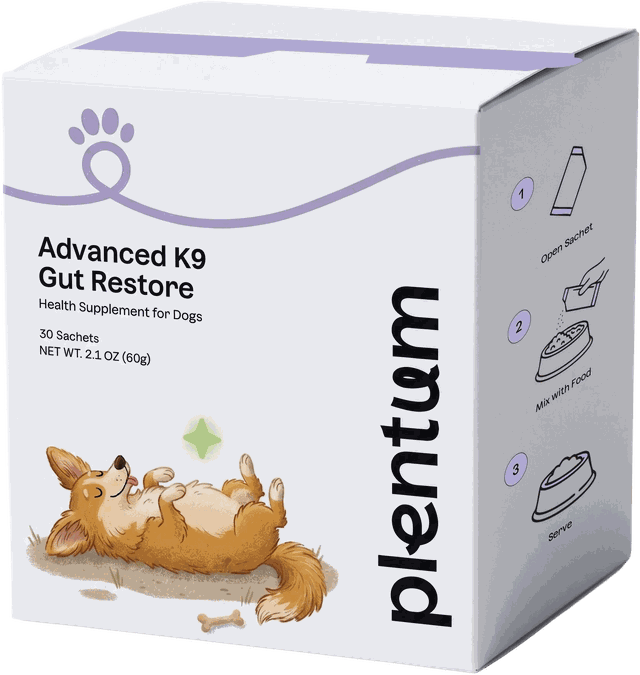
- Gut Restore, Calming Care, Itch & Immune Care, and Metabolic Care are made in Canada.
- Microbiome Care: made in the USA, with a Certificate of Analysis for each lot.
What should you check beyond a quality claim?
These are the things we do not claim about the new supplements.
- Ask for a Certificate of Analysis for the supplement you choose.
- Read the laboratory details on the certificate.
A five-question checklist for any dog supplement
- Does the label show every ingredient and its amount?
- Does the brand say who makes it and where?
- Can you see a Certificate of Analysis, and does it name the lab and the tests?
- Do the quality words match their meaning: accredited, certified, third-party, seal?
- Does the brand say what it does not claim?
If you want a supplement to match, take the two-minute quiz.
See how the bundles work in our guide to why we made four new supplements.
Two of the tested supplements are in the Gut Restore + Itch & Immune Care bundle.
Compare ingredients and daily servings in our supplement comparison.
Three quality words that often get mixed up
Each phrase below means something specific, so check which one a brand actually uses.
| Option | How it works | Best fit |
|---|---|---|
| Lot tested | A lab checks a sample from each production run | Shows results for the lot you receive |
| Accredited lab | An outside body has assessed the lab's methods | Tells you the lab meets a standard |
| Certified product | A program audits the product or the brand | Only valid when the brand names the program |
FAQ
Is every lot of Plentum tested?
Yes.
Every lot of all five Plentum supplements is lab-tested and has a Certificate of Analysis.
Check the certificate for the tests and results reported for that supplement.
Where can I see a Certificate of Analysis?
Our quality and testing page lists what is checked and shows first-lot results.
Every lot ships with its own certificate.
What does ISO/IEC 17025 accredited mean?
Accreditation means a laboratory has been assessed as competent to perform specific tests.
The scope of accreditation identifies those tests.
It does not establish that a supplement will benefit a particular dog.
How can I check Plentum’s testing information?
Read our quality and testing page and the Certificate of Analysis for the supplement.
The certificate shows the tests and results reported for that lot.
Testing information does not replace advice about whether a supplement suits your dog.
Sources
- Standards Council of Canada. Directory of accredited organizations, including laboratories accredited to ISO/IEC 17025:2017. SCC directory
- Health Canada. The Compendium of Analytical Methods (microbiological volumes). Canada.ca
- Membership program requirements. Program details
- Plentum. What we test on every lot, with first-lot results. Quality and testing
- Weese JS, Martin H. Assessment of commercial probiotic bacterial contents and label accuracy. Can Vet J. 2011. PubMed 21461205
- U.S. Food and Drug Administration. Animal food labeling and pet food claims. FDA