








Quick answer: Dog acid reflux natural remedies are simple home steps: smaller meals, a raised food bowl, a gut-supporting routine and, in some cases, a short fast. They pair well with veterinary care. Reflux can also signal ulcers, foreign bodies or dental disease, so rule those out first. If your dog loses weight, vomits blood or refuses food for more than 24 hours, call your vet now.
Key takeaways
- Acid reflux in dogs happens when stomach contents flow back into the esophagus, often tied to a weak lower esophageal sphincter.
- Flat-faced breeds such as pugs, Frenchies, bulldogs and Boston terriers may carry a higher risk because of airway-driven pressure changes.
- The 2018 ACVIM consensus statement points to the mucosal barrier as central to managing reflux-related damage.
- Smaller, more frequent meals and elevated feeding are the most useful lifestyle changes you can make.
- Always rule out dental disease, ulcers and foreign bodies before you assume reflux is the only problem.
Why Some Breeds Get Hit Harder
Brachycephalic dogs, such as your pugs, Frenchies, English bulldogs and Boston terriers, carry a double burden. Their squished skull anatomy creates chronic upper airway obstruction, which in turn changes the pressure dynamics in their entire chest and belly.

Airway restriction and reflux can show up together in flat-faced dogs. In practical terms, it is not just snoring. It is a whole-body pressure problem, so it is worth asking your vet about both.
If you own a flat-faced dog, keep this piece of the puzzle in mind when you notice changes in appetite or swallowing.
The Step Most Owners Skip: Ruling Out Bigger Problems
Before you load up on pumpkin and slippery elm, rule out the serious causes. Persistent reflux in dogs can signal ulcers, foreign bodies, hiatal hernias or dental disease creating chronic inflammation.
The 2018 ACVIM consensus statement on gastrointestinal protectants drove this point home.
The authors, a panel from UC Davis, Texas A&M, NC State and Zurich, noted that clinical dosages of acid-suppressing drugs have not been well established in dogs. That means vets often rely on trial and response, not guesswork.
If your dog has lost weight, vomits blood or refuses food for more than 24 hours, stop reading and call your vet. If your vet has already ruled out the medical red flags, you can try natural support at home.
You might also want to read up on 7 Medical Causes of Poodle Loss of Appetite to Rule Out First if your pup is suddenly turning up their nose at dinner.
Reflux and food refusal often travel together. Infected gums cause drooling, lip-licking and reluctance to eat. That looks just like reflux, so get those teeth checked.
Natural Remedies That Actually Work
Let's get into the toolkit. None of these replace veterinary care, but they pair well with it.
1. Smaller, more frequent meals
This is the single most effective change you can make. A stuffed stomach puts pressure on the lower esophageal sphincter, the valve that keeps stomach contents where they belong. Feed your dog two to four small meals instead of one or two big ones.
2. Elevated feeding
Gravity is your friend. Raise the food bowl so your dog does not have to bend down.
For larger breeds, a raised feeder is a game changer. For smaller dogs, a stool under the bowl works. The angle helps keep stomach contents where they belong.
3. Postbiotics: the quiet hero
Postbiotics do not require live bacteria to work. That means they are more stable and easier on sensitive stomachs. If your dog's gut is inflamed, postbiotics may help calm the gut without adding more microbial traffic to an already busy system.
They help support the mucosal barrier, which the ACVIM consensus statement points to as important for the lining's recovery.
4. Slippery elm bark
This old-school herbal remedy coats and soothes the esophagus and stomach lining. Mix about half a teaspoon of the powder with water into a slurry, and serve it 30 minutes before meals.
It forms a protective film that lets the tissue underneath recover. Most dogs tolerate it well, though always check with your vet first if your dog is on medications.
5. Plain pumpkin puree
Not the pie filling. Just plain cooked pumpkin. A tablespoon or two per meal adds fiber that helps regulate digestion without irritating the gut. It is gentle, it is cheap, and it works well as a simple add-in.
6. Fasting windows
Dogs evolved to handle short fasts. If your dog has a reflux flare, skip dinner for 12 hours and reintroduce a bland meal the next morning. Do not try this with puppies, diabetic dogs or tiny breeds without vet guidance.
What About Anesthesia-Related Reflux?
This is worth a separate mention. If your flat-faced dog is scheduled for surgery, ask your vet about pre-anesthetic fasting protocols and whether acid suppressants make sense. Some reflux cases develop overnight, literally, after a routine procedure. The damage can last weeks.
Building Your Dog's Inner Ecosystem
Reflux rarely exists in isolation. It is usually one symptom of a deeper imbalance in the gut. The canine gut microbiome is a busy community of bacteria, fungi and other microbes that influence digestion, immunity and mood.
When that community wobbles, the whole system feels it. Understanding the ecosystem helps you stop chasing symptoms and start looking at root causes.
Where supplements fit
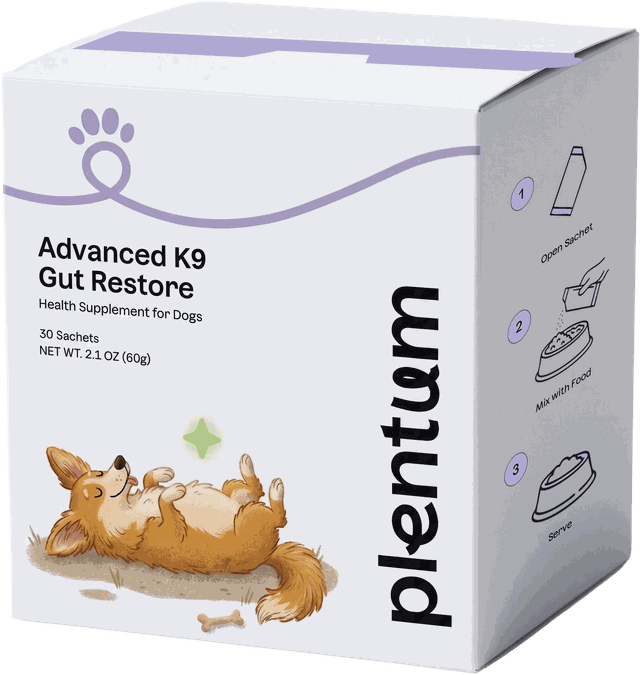
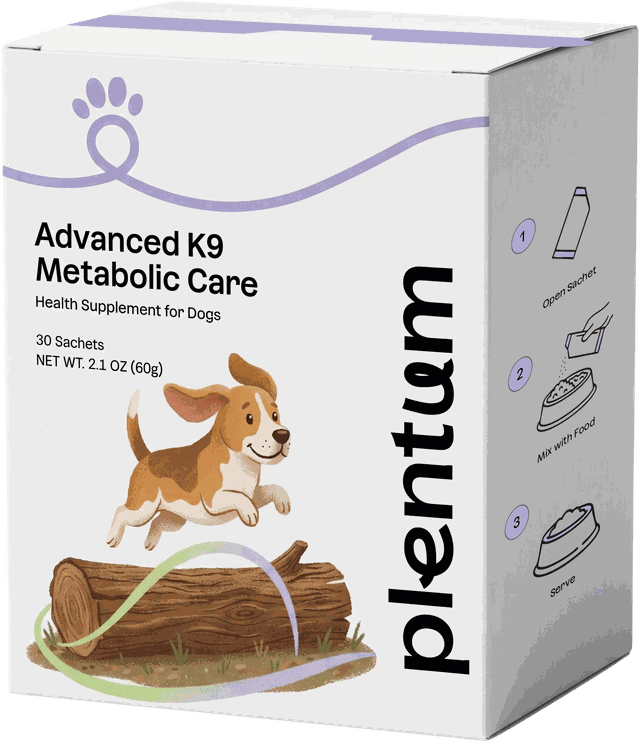
Supplements can sit alongside a gut-friendly routine. They do not replace smaller meals, a raised bowl or a visit to your vet when symptoms escalate. Check with your vet before adding anything new, especially if your dog takes medication.
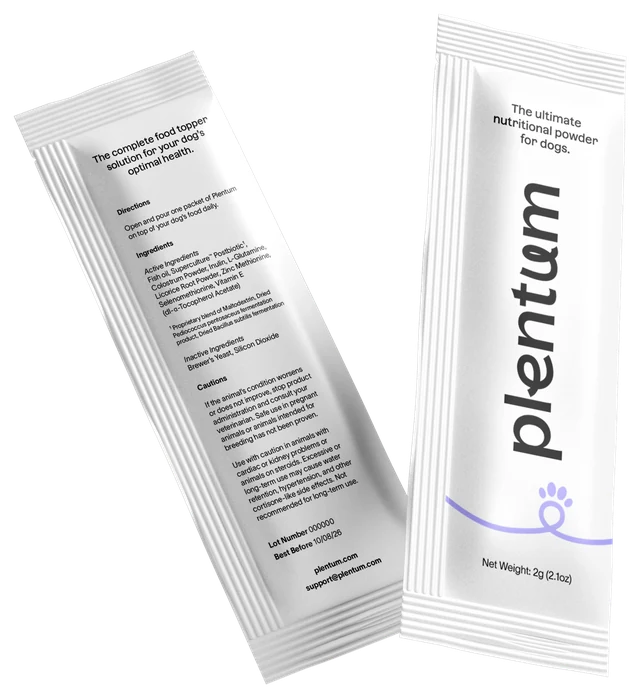
Supplement, not a medicine. Ask your vet if your dog has a health condition or takes medication.
Talking to Your Vet Without Feeling Awkward
Most vets would rather hear about a symptom early than late. Bring a short written list: what you have seen, how often it happens, what you have already tried, and every medication or supplement your dog takes. If you want to try a natural remedy, say so, so your vet can check it against any medications.
Keep a dated log of meals, symptoms and remedies. Trends are much easier to read than single days, and your vet will find that record useful.
Ask direct questions. Is this reflux, or a sign of something else? Do you suggest an acid suppressant? What should we do before surgery? A good vet will answer plainly and will tell you when a natural remedy is not the right next step.
Final Thoughts From the Exam Room
Dog acid reflux is one of those conditions that looks scary but responds well to a thoughtful approach. Start with the basics: smaller meals, raised bowls and a gut-supporting routine. Layer in postbiotics for mucosal support.
Watch your breed's specific risks, especially if you share your home with a snorty, lovable flat-faced pup. And never skip the vet visit when symptoms escalate.
It takes consistency, the right information and a team approach between you and your vet.
Frequently asked questions
Are natural remedies enough for dog acid reflux on their own?
Usually not. Smaller meals, raised feeding and a gut-supporting routine are useful home steps, but they work best alongside a vet check. If your dog loses weight, vomits blood or refuses food for more than 24 hours, call your vet now.
Which dogs are most at risk of acid reflux?
Flat-faced breeds such as pugs, French bulldogs, English bulldogs and Boston terriers may carry a higher risk because of airway problems. Any dog can get reflux, though, so watch for signs in every breed. Ask your vet about breed-specific risks.
Is slippery elm safe for a dog with reflux?
Most dogs tolerate slippery elm well, but it still needs your vet's okay first, especially if your dog takes medication. Mix about half a teaspoon of the powder with water and serve it 30 minutes before meals. Stop and call your vet if you see new or worsening symptoms.
When should I book a vet visit for dog reflux?
Call your vet promptly if your dog has drooling, reluctance to eat, weight loss or blood in vomit. These signs can point to problems beyond reflux, such as ulcers, foreign bodies or dental disease. A dated symptom log makes the visit more useful.
Sources
- A 2022 review in The Veterinary Quarterly
- ACVIM consensus statement: Support for rational administration of gastrointestinal protectants to dogs and cats (Journal of Veterinary Internal Medicine, 2018)
- Esophagitis in Cats and Dogs (Veterinary Clinics of North America: Small Animal Practice, 2021)
- Anaesthesia of brachycephalic dogs (Journal of Small Animal Practice, 2018)


