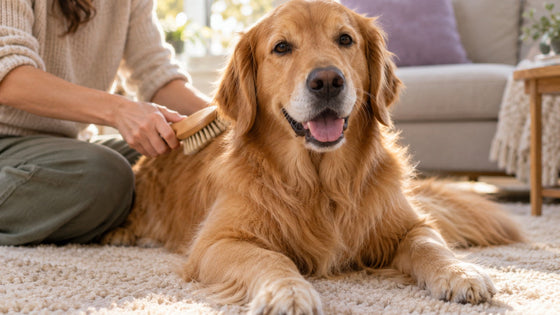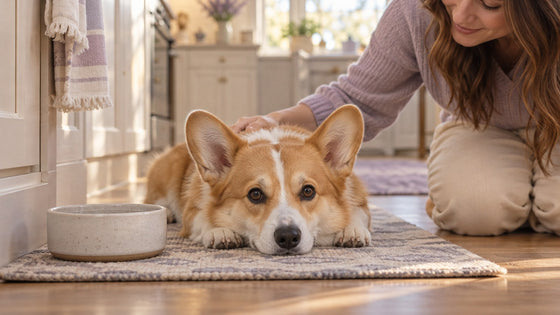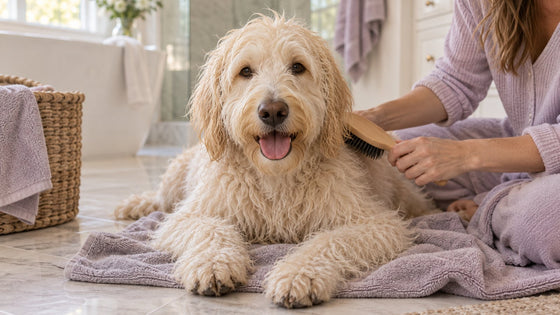

Start overweight dogs with short, gentle activities and increase gradually.
Sniff walks and indoor games offer useful starting points.
Try sniff walks, gentle water play, slow-roll fetch, or indoor games.
Build activity gradually over several weeks.
Pair them with measured meals and regular body-condition checks.
Three points on low-impact activity for overweight dogs
- Activity works best alongside consistent meal portions and regular body-condition checks.
- Keep sessions short at first, and increase total weekly activity by no more than about 10% per week.
- Check with your vet before you start, especially if your dog has joint pain or a health condition.
Why start an overweight dog with low-impact activity?
Extra weight stresses a dog's joints, especially the hips, knees (stifles) and spine.
Every extra pound adds load when a dog walks or runs, and many overweight dogs already have some joint discomfort.
Sustained running, jumping or rough play can cause pain or injury before fitness improves.
Low-impact movement keeps your dog active while easing joint compression.
Water supports much of your dog’s weight.
Sniff walks offer mental stimulation at a slower pace.
Short indoor games can gently build muscle tone.
Aim for movement your dog enjoys and can repeat every day.
Your vet can check joints and conditions that may contribute to weight gain, such as hypothyroidism.
They can set a safe starting duration and intensity.

How do you plan a sniff walk?
A sniff walk isn't a stroll where your dog trots along while you check your phone.
Your dog leads, choosing where to stop, how long to sniff and which way to turn.
You follow, and the leash stays loose.
Yes, you'll feel like you're waiting at a bus stop. That's the point.

They're more tiring than they look. Exploring scents takes mental effort.
A sniff walk can leave your dog tired without a fast pace.
Many owners find a 20-minute sniff walk leaves their dog calmer and more satisfied than a brisk 45-minute walk.
How to do a sniff walk well
- Use a long leash, about 5 to 10 feet, or a well-fitted harness that lets your dog move freely without pressure on the neck.
- Let your dog pick the route at each turn.
- If your dog spends two minutes on one bush, that's exactly right.
- Aim for 15 to 20 minutes to start. As fitness builds, extend the walk to 30 to 45 minutes.
- Pick softer surfaces such as grass, dirt paths and mulch over pavement.
- Skip the hottest part of the day. Overweight dogs overheat faster, so early morning or evening is safer.
A mentally satisfied dog may be less likely to pace, beg, or seek food from boredom.
Pair sniff walks with consistent meals and snacks.
Carry fresh water on longer walks, and watch how your dog breathes when you get home.
Which water activities suit your dog?
Water is one of the most joint-friendly places a dog can exercise.
Water buoyancy reduces joint loading. Some dogs move more comfortably in water than on land.
| Option | Joint impact | Setup needed | Best for |
|---|---|---|---|
| Shallow stream or lake wading | Very low | None (natural access) | Dogs who like water naturally |
| Kiddie pool in the yard | Very low | Pool + hose | Hot weather, nervous water dogs |
| Canine hydrotherapy pool | Near zero | Professional facility | Dogs with joint issues or post-surgery |
| Underwater treadmill (aqua-treadmill) | Very low | Vet/rehab facility | Precise controlled exercise |
If your dog is new to water, go slowly.
Add a few inches of water to a kiddie pool.
Offer a toy and let your dog explore at their own pace.
Never force a dog into water.
Skip any water with algae scum or a strong smell.
Once your dog is comfortable, shallow-water paddling works the core, hips, and legs.
It avoids the jarring impact of hard ground.
Pick a spot with a gentle entry and no slippery steps.
After each session, rinse off salt or chlorine and dry the coat and ears.
Stop as soon as your dog shows distress, such as frantic paddling, trembling or trying to climb onto you.
Fetch, adjusted
Classic fetch, with its sprint, pivot and leap, is one of the higher-impact dog games.
Sudden acceleration and sharp turns put twisting force on knees and hips.
Overweight dogs and dogs with joint sensitivity need gentler play.
Lower-impact ideas
- Slow-roll fetch: roll the toy slowly across flat grass instead of throwing it. Your dog walks or trots to get it. The reward loop stays, and the joint stress drops sharply.
- Short toss on grass: keep throws to 5 to 10 feet, on grass rather than pavement, with no hills and no stairs.
- Bumper in shallow water: if your dog is a natural swimmer, a floating bumper in shallow water turns fetch into low-impact exercise.
- Snuffle mat find-it: hide the toy under a snuffle mat or in a low-sided box and let your dog find it. It slows the movement and adds a scent game.
- Gentle tug after the retrieve: a brief, low-intensity tug works muscles without running. Keep it to 30 to 60 seconds, with no jerking or twisting.
Choose toys that fit your dog’s mouth and resist splintering or breaking.
Replace worn toys before small pieces become a choking risk.
Your dog should move at a relaxed trot, not an all-out sprint.
If they're panting heavily within two minutes, the pace or distance is more than their fitness can handle.
Shorten the next session and try again tomorrow.
Indoor games for rainy or scorching days
Bad weather or extreme heat doesn't have to mean a sedentary day.
Indoor games give your dog movement and mental work without a yard or perfect conditions.
Stairs, with caution
For dogs without joint conditions, slow stair climbing, one flight at an easy pace, works the rear-end muscles.
Go slowly, and never encourage running on stairs.
Skip stairs entirely for dogs with confirmed hip dysplasia, luxating patella or another joint diagnosis.
Hallway come practice
Stand at one end of a hallway and ask your dog to come.
Reward with a low-calorie snack or a bit of petting, then walk to the other end and repeat.
Use short hallway recalls for indoor activity. Several repetitions add movement without a long outing.
Muffin tin nose work
Put small snacks in a few cups of a muffin tin and cover every cup with a tennis ball.
Your dog nudges the balls away to find the reward.
Standing, shifting weight and sniffing all take gentle physical effort, and the game keeps the mind busy.
Wobble board or balance disc, beginner level
A low-profile balance disc or beginner wobble board works the core stabilizing muscles while your dog just stands on it.
Start with a few seconds at a time. Canine physical therapy uses the same technique.
On a rainy or very hot day, combine two or three of these games into a short indoor session.
Try 10 minutes of hallway recall practice, a muffin tin search, and rest.
This can suit a dog who cannot go outside.
An eight-week activity build
- Weeks 1 and 210 to 15 minutes twice a day, with rest days as needed
- Weeks 3 and 415 to 20 minutes twice a day
- Weeks 5 and 620 to 25 minutes twice a day, plus water play
- Weeks 7 and 825 to 30 minutes of mixed activity twice a day
Building up: the 10% rule
A common mistake with overweight dogs is ramping up too fast out of enthusiasm.
A dog inactive for months needs time to build heart and muscle conditioning.
Start gently even if they seem willing to walk farther.
Many vets suggest raising total weekly activity time by no more than 10% per week.
Increase activity gradually so muscles, joints, and cardiovascular fitness can adapt.
Small increases also help you spot discomfort early.
A sample 8-week build
- Weeks 1 and 2: 10 to 15 minutes of activity twice a day, such as a sniff walk plus one indoor game. Rest days are fine.
- Weeks 3 and 4: 15 to 20 minutes twice a day. Add a third short session on some days.
- Weeks 5 and 6: 20 to 25 minutes twice a day. Start water play if you have access.
- Weeks 7 and 8: 25 to 30 minutes of mixed activities twice a day. Gentle fetch variants can now join the rotation.
This is a rough guide.
Slow the progression for dogs who are very out of shape.
It assumes your dog tolerates activity well and your vet has approved the progression.
Be ready to take a rest day, because pushing through soreness usually costs you a setback.
Your vet may recommend a gentler start for significant excess weight or confirmed joint problems.
Several 5-minute sessions may suit your dog better than longer stretches.
Keep a log with the date, the duration, the surface and how your dog seemed the next morning.
It shows trends that single days hide, and it gives your vet useful information at the next check-up.
Signs your dog needs a break
Dogs pick up on their people's enthusiasm, and they can push past their comfort zone without a clear complaint.
Learn their fatigue signals early.

Stop the session if you see
- Heavy panting that doesn't ease with a pause
- Lagging behind you, or stopping and refusing to move
- Excessive drooling or foam at the mouth
- A noticeably different gait, such as limping, hopping or favoring one leg
- Bright red gums, a sign of overheating that needs veterinary attention right away
- Stumbling or seeming disoriented
- Lying down mid-walk and not wanting to get up
Signs the session was well paced
- Your dog is breathing normally within 5 to 10 minutes of finishing
- They move comfortably at the same pace throughout
- They stay interested in sniffing and taking part
- They rest comfortably afterward and don't seem distressed
After activity, offer fresh water. Avoid vigorous exercise right after a meal.
Many vets suggest waiting an hour or so after eating, especially with large, deep-chested breeds where bloat is a concern.
Movement plus meals
Activity alone rarely changes a dog's weight without a close look at what and how much they eat.
The two work together. Exercise builds muscle and increases activity.
Measured meals provide fuel while helping control excess calories.
A few habits go well with a movement routine:
- Consistent meal times reduce begging and even out energy through the day.
- Measure every meal and every snack instead of eyeballing it. Extra pieces add up quickly over a week, and our portion control guide shows how to weigh food and count treats.
- Low-calorie snacks such as baby carrot pieces and blueberries let you reward games and training without adding much energy.
- If you're thinking of adding a new food, serving sizes by weight are in Can Dogs Eat Cucumbers? Serving Guide by Weight (2026).
Keep both on a steady weekly schedule so you can tell which change is doing what.
Your vet gets a clearer picture at the next visit, too.
Joint health along the way
Many overweight dogs have some joint discomfort, and sometimes the joint problem came first.
Less activity leads to weight gain, extra weight leads to more joint stress, and that stress makes activity harder.
In practice, that means:
- Choosing soft surfaces such as grass, sand and dirt over concrete or asphalt wherever possible.
- Avoiding sharp turns, jumping or rapid acceleration.
- Using ramps rather than stairs for dogs who sleep on furniture or climb into cars.
- Keeping sessions short enough that your dog finishes without stiffness.
For more on when joint health really starts, read 3 Myths About When Joint Health in Dogs Really Starts.
A sample week
See how a balanced week might look for a dog in the early stages of a weight management plan:
- Monday: morning sniff walk (15 minutes) plus evening muffin tin nose work (10 minutes)
- Tuesday: hallway come practice (10 minutes) plus outdoor slow-roll fetch on grass (10 minutes)
- Wednesday: rest day, or a very gentle 10-minute sniff walk
- Thursday: morning sniff walk (15 minutes) plus shallow water play if available (15 minutes)
- Friday: indoor balance disc work (5 minutes) plus a gentle hallway game (10 minutes)
- Saturday: a longer sniff walk (20 to 25 minutes) as the main outing
- Sunday: rest day
That's roughly 110 to 125 active minutes across the week.
As fitness improves over four to eight weeks, sessions get longer and rest days may drop to one per week.
Adjust whenever your dog's energy, appetite or comfort changes, and run the new schedule by your vet.
Where supplements fit
A supplement can sit alongside a movement plan and measured meals.
It doesn't replace them, because activity, portion control and regular vet checks do most of the work.
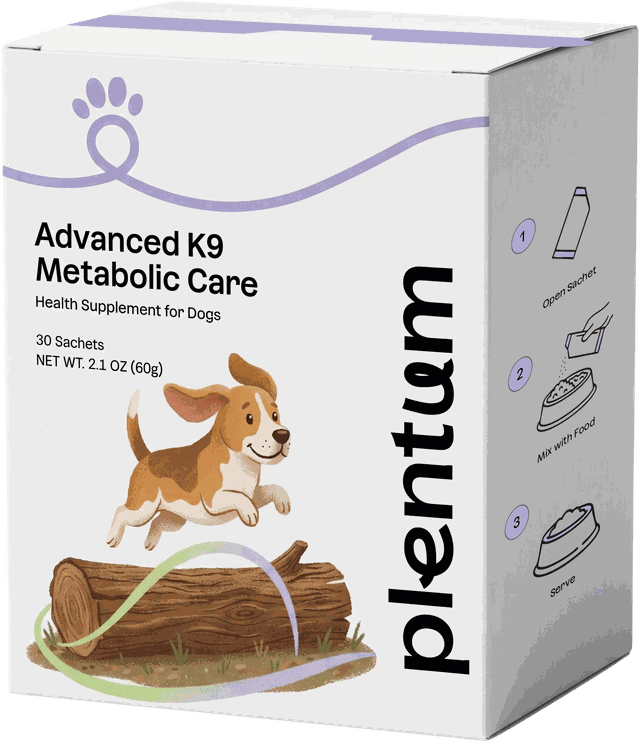
Metabolic Care supports healthy weight management alongside measured portions and daily exercise.
Our page on making a dog weight plan stick walks through the routine owners find easiest to keep.
For the research on weight and metabolic ingredients, see our weight and metabolic research hub.
Vet reference
Use this guide alongside the WSAVA Global Nutrition Guidelines and the advice of the vet who manages your dog's care.
Sniff walks, water play or adjusted fetch
Each activity loads the joints differently, so most plans mix all three.
| Option | How it works | Best fit |
|---|---|---|
| Sniff walk | Slow, dog-led walking with lots of scent work | Every overweight dog, as the daily base |
| Water play | Buoyancy carries much of the body weight | Dogs with stiff joints who enjoy water |
| Adjusted fetch | Slow rolls and short tosses on grass | Dogs who love to retrieve, once fitness builds |
Use the dog calorie calculator for a starting range.
Then assess your dog with the 9-point body condition chart.
Frequently asked questions
How much activity does an overweight dog need each day?
No single number suits every dog.
Many owners start with two short sessions of 10 to 15 minutes a day and build from there.
Raise total weekly time by no more than about 10% per week.
Is swimming safe for an overweight dog?
Water is usually one of the gentlest options because buoyancy eases the load on the joints.
Go slowly in shallow water, never force a dog in, and stop if your dog shows distress.
Dogs with a joint condition or recent surgery should swim only under a vet's guidance or in a supervised rehab setting.
Which fetch games are safest for an overweight dog?
Choose low-impact versions such as slow-roll fetch on grass, short tosses of 5 to 10 feet and a snuffle mat find-it game.
Skip sprints, sharp turns, hills and stairs.
If your dog pants heavily within two minutes, the pace or distance is too much for now.
Can walks and games replace a change in diet?
Activity helps, but it rarely works alone.
Movement builds muscle and fitness, while measured meals and snacks control the energy coming in.
Sources
- WSAVA Global Nutrition Guidelines
- Vitger AD, et al. Integration of a physical training program in a weight loss plan for overweight pet dogs. J Am Vet Med Assoc. 2016. PubMed 26720083
- Kealy RD, et al. Effects of diet restriction on life span and age-related changes in dogs. J Am Vet Med Assoc. 2002. PubMed 11991408