





You’ve started a new bag of food, and now your dog’s poop is softer. Before changing the bowl again, check how your dog feels.
A food change can cause digestive upset. Timing alone, though, doesn’t establish the cause, as VCA’s diarrhea guide explains.
Is soft stool after a food switch normal?
Minor changes in consistency can happen in healthy dogs. A softer bowel movement doesn’t automatically mean the new food is unsuitable.
Notice the pattern: whether stool still holds a shape, how often your dog goes, and whether appetite or behavior has changed.
| Stool pattern | Next step |
|---|---|
| Slightly softer, otherwise well | Monitor closely; slow the transition |
| Repeated loose or watery stool | Call your vet |
| Blood or other illness | Get prompt veterinary advice |
The table summarizes AKC’s transition advice and the urgent-care guidance above. It can’t diagnose the cause.
A photo and a few notes are more useful than trying to choose a perfect stool score. Our dog poop color chart helps you describe appearance.
How long should I wait for the stool to settle?
There’s no universal number of soft stools that makes a food switch normal. Your dog’s overall condition matters throughout the change.
For ongoing loose stool in an otherwise well adult, call by 48 hours. Call sooner for the warning signs above.
Cornell’s veterinary guidance advises care when diarrhea persists for 48–72 hours.
Its guidance also identifies black, tarry stool as a reason for veterinary attention.
If stool stays soft after a careful transition, arrange a veterinary review.
AKC recommends that step when stomach upset continues despite switching gradually.
Our guide to diarrhea warning signs offers more background for that conversation.
What does a gradual food switch look like?
For a well dog beginning a routine change, AKC gives these milestones. Move more slowly if your dog needs it.
| Milestone | Old food | New food |
|---|---|---|
| Day 1 | 75% | 25% |
| Day 3 | 50% | 50% |
| Day 5 | 25% | 75% |
| Day 7 | 0% | 100% |
These are the milestones in AKC’s food-switch guide, rather than deadlines your dog has to meet.
Don’t increase the new food just because the next day arrives. Watch your dog’s response before each increase.
Dogs with digestive sensitivities or existing gastrointestinal problems may need longer.
A prescribed diet change needs your vet’s instructions.
Check the feeding directions on both bags, too. Ask your vet how to divide the daily portions when the foods have different calorie densities.
For planning before you open the bag, our longer food-switch guide covers a slower schedule.
Should I go back to the old food?
Cornell recommends returning to the original diet after a too-fast switch, letting stools settle, and then restarting more gradually.
That advice needs context. If your vet prescribed the change, or the old food was recalled, get individual instructions before returning to it.
VCA recommends sharing the onset, stool pattern, and diet history. Ask whether the clinic wants a fresh stool sample.
Food changes are only one possibility.
Parasites, infections, and other problems can also cause loose stool, so repeated switches may miss the cause.
Can pumpkin or a probiotic help?
If pumpkin is already going into every meal and stool remains loose, tell your vet how much you’re giving and for how long.
AKC advises veterinary guidance before using pumpkin for diarrhea or constipation. There isn’t a universal spoonful for every dog.
Similarly, a probiotic that didn’t help doesn’t explain why stool is loose. Bring its label to the appointment instead of guessing the next product.
Your vet can assess whether dietary support fits the situation.
Avoid starting human antidiarrheal medication without veterinary directions, as Cornell cautions.
Why is poop formed in the morning and soft later?
Write down the time and appearance of each bowel movement. A normal morning stool doesn’t explain a recurring change later in the day.
Include that pattern when you contact your vet. VCA recommends recording frequency and consistency to help assess diarrhea.
Could the new protein be the problem?
It’s possible, but loose stool alone can’t identify a food allergy. AKC explains that several conditions cause similar signs.
Tell your vet which proteins changed. If a diet trial is appropriate, follow its instructions before choosing another bag.
What if my puppy has loose stool?
Contact your vet about puppy diarrhea, even if your puppy still wants to play.
VCA recommends checking a stool sample for parasites in otherwise lively puppies.
AKC cautions against fasting growing puppies. A home diet change should follow your vet’s advice.
Where daily stool support fits
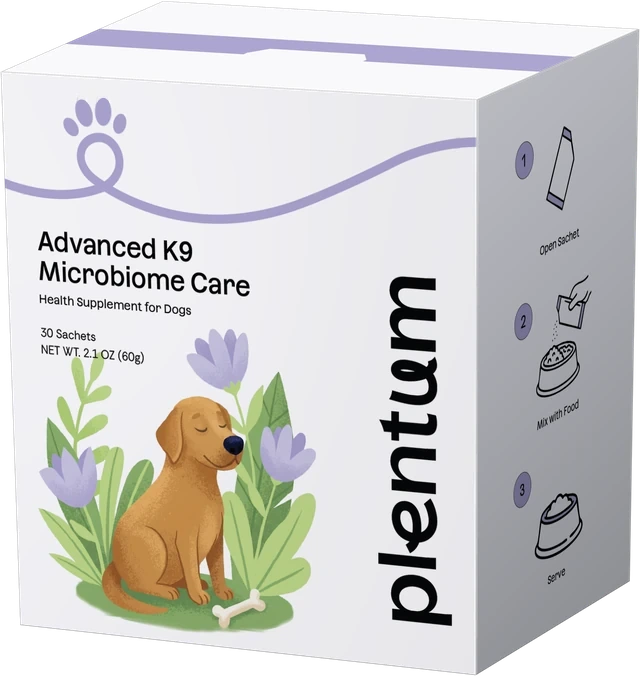
After reviewing the feeding plan and symptoms, you may want daily support for normal bowel function and healthy stool consistency.
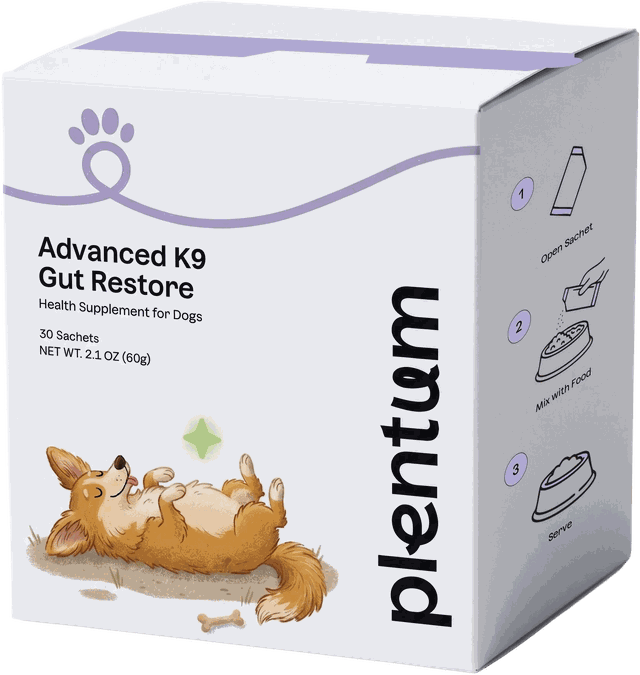
Advanced K9 Gut Restore supports those functions. It’s a daily supplement, with the amount based on your dog’s weight.
Pre-orders ship by October 26, 2026. Keep the stool notes for follow-up, and follow the product label’s directions and cautions.