





You looked at the price of dog supplements, felt your stomach drop, and wondered if you're paying for a label.
One owner on Reddit wrote that a supplement was "SO expensive," and plenty of people nodded along. Another posted a thread titled "Prescription and Supplement Prices," trying to line up two things that don't line up easily. Both owners had the right instinct: the sticker price tells you very little until you do some math.
This guide gives you a fair way to compare cost, shows where supplements and prescriptions do different jobs, and sets up a 30-day check so you know whether the money is doing anything for your dog.
Work out the cost per day, not the price per box
A $30 bottle and a $45 box can cost the same per day once you count what's inside. Divide the price by the number of days one container lasts at your dog's dose. Then multiply the daily cost by 365 to see the yearly number, which is the one that actually hits your budget.

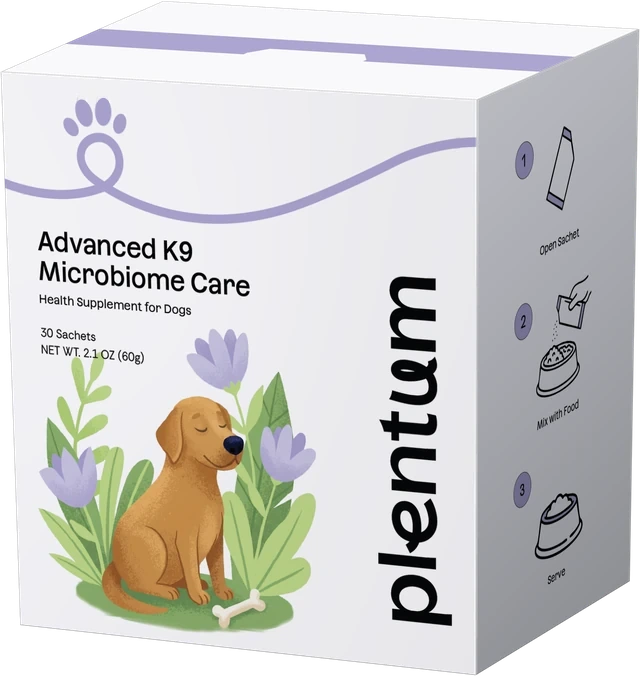
Take two prices as examples, since the arithmetic is the same for any brand. A 30-day supply at $44.99 works out to $44.99 ÷ 30, or about $1.50 a day. A 30-day supply at $34.99, the starting price of Advanced K9 Microbiome Care, works out to about $1.17 a day. Bigger dogs take more sachets a day, so their cost per day is higher.
| Step | What you do | Example |
|---|---|---|
| 1 | Find the daily dose for your dog's weight | 2 scoops a day for a 40 lb dog |
| 2 | Divide the servings in the container by the daily dose | 60 servings ÷ 2 = 30 days |
| 3 | Divide the price by the days it lasts | $45 ÷ 30 = $1.50 a day |
| 4 | Multiply the daily cost by 365 for a yearly cost | $1.50 × 365 = about $548 a year |
Do the same math on every product you're weighing, including the ones on sale. A big tub with a low price often has a daily dose that empties it in 2 weeks. You also want to check whether the label tells you the dose by weight, because "one scoop for all dogs" usually means a small dog gets too much and a large dog gets too little.
Dog supplements and prescriptions do different jobs
This is the part of the "Prescription and Supplement Prices" thread that's hard to answer fairly. A prescription is a drug your vet chose to address a diagnosed problem, so its price is tied to that problem. A supplement is a daily support product, and it makes no promise to do what a drug does.
Another owner, whose dog was on an itch prescription, noted it cost "$100" and asked what else was out there, which is a reasonable question to take to the vet.
So the fair comparison isn't "which is cheaper." At the next appointment, ask what the prescription is for, how long your dog needs it and what happens if you stop. Then ask whether a supplement is a sensible addition for the same dog. Never swap a prescription for a supplement on your own, and don't stretch a prescription to save money without calling the clinic first.
If cost is the problem, tell your vet. Most clinics can talk through generic versions, different pharmacies and whether a lower dose is appropriate, and they'd rather hear about the budget than find out your dog skipped doses.
When a human product is fine and when a dog-specific one matters
An owner on r/DogAdvice wrote that dog-specific fish oil isn't anything special and is overpriced, and another said you don't need expensive "pet quality" brands. They're partly right. Some ingredients are the same molecule in a human bottle and a dog bottle, and a plain fish oil is a good example when your vet agrees on the dose.
The trouble starts with what else is in the bottle. Human products can include xylitol, which is toxic to dogs, along with flavors and doses built for a 160 lb adult. Probiotics are a different story: strains that live in a human gut aren't guaranteed to matter in a dog's, which is covered in our look at canine-native vs human probiotics.
A workable rule has three steps. Confirm the dose for your dog's weight, since human doses are built for adults. Check the full ingredient list for xylitol and for anything your dog is sensitive to. Then do the cost-per-day math at your dog's weight, not a person's. If the human version passes all three, you've found a good deal. If not, the dog-specific price may be fair.
Subscribe or buy once?
One owner described "rotating brands every time amazon serves me a discount." That habit makes it hard to learn whether anything works, because each switch starts the clock over. A subscription takes away the rotating, and it also locks in the habit of giving the product every day.
Plentum subscriptions ship monthly, which matches a 30-day supply, and Plentum offers a 30-day guarantee. Whatever brand you consider, read the cancellation and refund terms before you pay. You want to be able to stop after one box without a phone call.
If you aren't sure yet, buy once. Run the 30-day check below. If the first box passes, switch to a subscription so you don't run out in the middle of a trial.
Fresher breath is one of the easier goals to track at home, and our guide to supporting fresher breath with daily oral care pairs a sachet with brushing and dental checkups.
How to tell, after 30 days, if it's earning its place
Before day one, write down what you want to change. For a gut product, that might be stool quality on the 1 to 7 stool scale each day. For a coat product, it might be how much scratching you see at night. A vague goal like "healthier" gives you no way to say yes or no.
Keep the food and routine steady, follow the label directions, and track what you notice. Discuss your notes with your vet when deciding whether to keep the supplement in your dog's routine.
If your dog has diarrhea for more than a day or two, vomiting, blood in the stool, or a sudden change in appetite, skip the trial and call your vet. A supplement isn't the right first move for those signs.
Our digestive supplement cost and value guide covers the label math in more detail, and our calming supplement guide shows the same checks for calming products. If you want to see Plentum's five supplements and their daily costs side by side, use the supplement comparison, or take the 60-second quiz to see which one fits your dog.
Powder, chew and prescription costs work differently
Each format below carries a different cost driver, so the daily math matters more than the shelf price.
| Option | How it works | Best fit |
|---|---|---|
| Daily powder supplement | Cost follows sachets a day for your dog's weight band | Check the amount listed for each active |
| Chew supplement | Cost follows chews a day for your dog's weight band | Check whether amounts appear per chew |
| Prescription diet or medicine | Your vet sets the product, amount and follow-up plan | Ask about refills and recheck visits |
FAQ
Dog supplements are SO expensive. Are they worth it?
It depends on what you're trying to change and whether you can see it. Work out the cost per day, set a specific goal and give it 30 days. If you can't point to a change, the supplement isn't worth the money for your dog.
How do I compare prescription and supplement prices fairly?
Compare them as cost per day for the same dog, but remember they do different jobs. A prescription addresses a diagnosed problem, and a supplement is daily support.
Are dog-specific supplements just overpriced versions of human ones?
Sometimes the active ingredient is the same, and then the human version can be a good deal when your vet agrees on the dose. Human products can carry xylitol or doses made for adults, so check the whole label first. Probiotic strains are less interchangeable than a plain oil.
Should I subscribe or buy once, and what if it doesn't work for my dog?
Buy one box first if you're unsure, then subscribe once it earns its place. Plentum subscriptions ship monthly and come with a 30-day guarantee. Check the refund terms of any brand before you pay.
Is a daily gut supplement worthwhile for an otherwise healthy dog?
Some owners like it as daily support, and others stick with good food and skip it. The 30-day check helps you decide whether it earns a place in your dog's routine.
Sources
- U.S. Food and Drug Administration. Animal food labeling and pet food claims. FDA
- American Kennel Club. Popular dog supplements. AKC
- Expert consensus document on probiotics from the International Scientific Association for Probiotics and Prebiotics. PubMed 24912386
Five supplements, each aimed at a different need
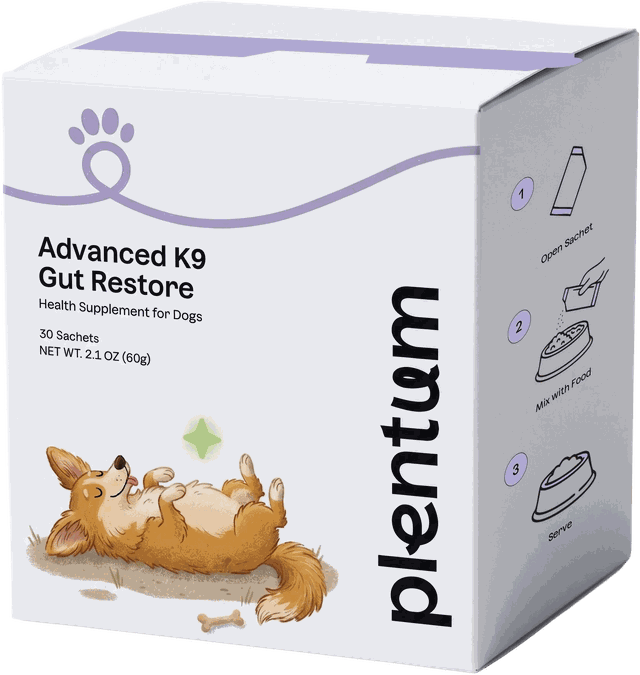
- Gut Restore It supports normal bowel function and healthy stool consistency, and helps maintain a balanced gut. From $1.50/day
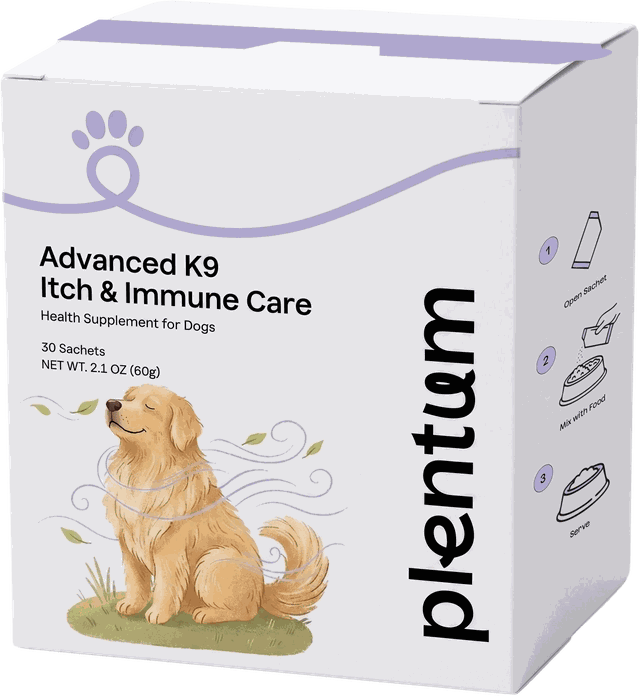
- Itch & Immune Care It supports a normal immune response to environmental and seasonal triggers, and helps maintain a healthy coat. From $1.50/day
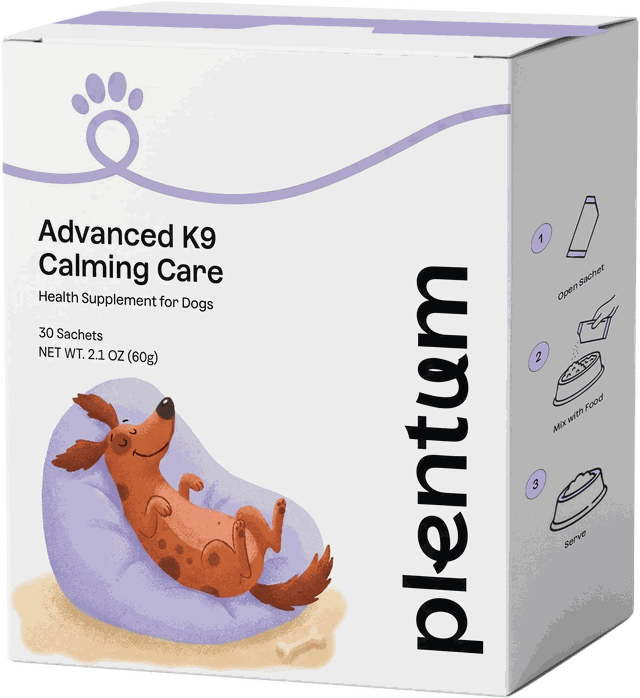
- Calming Care It supports a calm, relaxed demeanor during occasional situational stress such as storms, travel, or vet visits. From $1.50/day
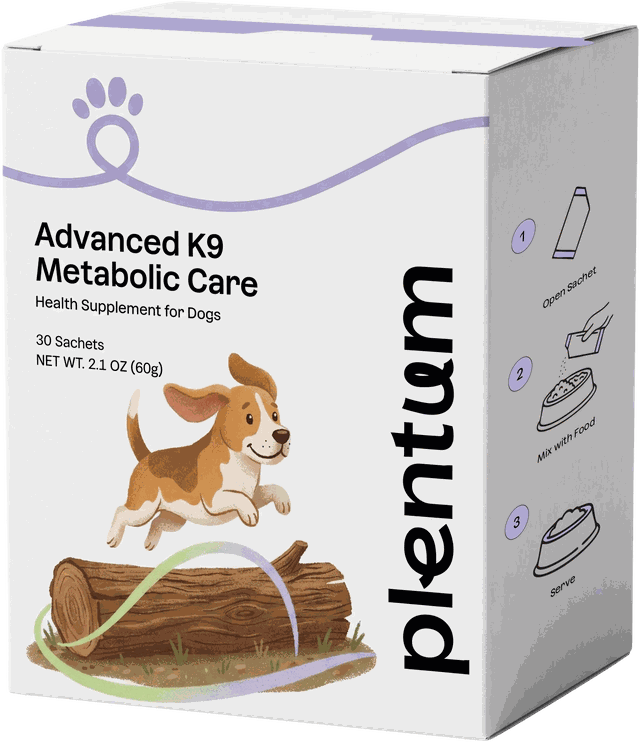
- Metabolic Care It supports healthy weight management alongside measured portions and daily exercise. From $1.50/day
- Microbiome CareFits this guide It’s a daily powder with a postbiotic and prebiotic foundation, plus colostrum and omega-3, to support gut, oral, skin, and coat health. From $1.17/day