





Bad breath in dogs usually comes from bacteria, plaque, and tartar along the teeth and gumline.
Daily brushing and regular dental checkups slow that buildup, so start there before you look for other causes.
A sudden change in odor, or odor with bleeding, drooling, or trouble chewing, needs a vet exam.
What causes bad breath in dogs?
Food particles and bacteria collect at the gumline, and plaque can harden into tartar if it stays.
That tartar irritates the gums, and the irritation adds odor over time.
Dental disease is a common source, and the Merck Veterinary Manual covers dental disorders in dogs in detail.
Odor can also come from the gut or another illness.
What your dog eats can shape breath odor too, so note any recent diet change when you look for patterns.
Which breath changes need a closer look?
Match what you notice with the guide that covers it.
Each guide goes deeper on one cause.
| If you notice | Read this guide |
|---|---|
| Yellow or brown crust along the gumline | How to remove tartar from dog teeth |
| Breath with a fecal smell, like poop | Dog breath smells like poop |
A crust or a strong smell that keeps returning deserves a closer look, even when the teeth look fine from the outside.
A daily oral care routine
Consistency matters more than perfection.

Use this routine most days, and build it up slowly if your dog resists.
- Use toothpaste made for dogs, never human toothpaste
- Brush the outer tooth surfaces, where tartar builds most
- Start with a few seconds, then increase over several days
- Look at the gumline for redness, swelling, or bleeding
Start small if your dog resists brushing
Pair short sessions with praise, and keep each one calm and brief.
Stop before your dog gets upset, and try again later that day or the next.
What happens at a vet dental exam?
A vet checks the teeth and gums, looks for tartar and loose teeth, and may recommend a professional cleaning under anesthesia.
Ask the clinic about cost and timing when you book.
Dental X-rays can show problems below the gumline, so ask whether they are part of the exam.
Where daily support fits
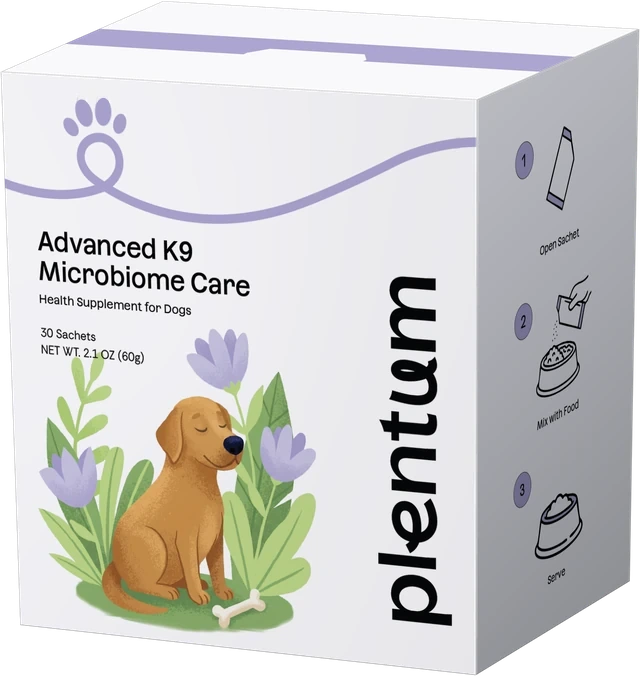
Plentum Advanced K9 Microbiome Care is a daily foundation with a postbiotic and a prebiotic.
It supports gut and oral health, and it suits dogs from 12 weeks of age.
Dosing is by weight, and dogs usually take it straight over food.
For background on probiotics in general, see the AKC guide to probiotics for dogs.
For a fuller picture of your dog's daily supplements, read the Dog probiotics and supplements guide.
Signs that your routine is working
Fresher breath, healthy gums, and less new buildup are the signs to track.
Note changes on a simple calendar, so you can show your vet what you have seen.
Read the Dog digestive health and stool guide when odor comes with stool changes.
Odor and stool can point to different causes, so each guide covers its own signs.
When should you call the vet?
Call your vet soon if bad breath comes with any of these signs:
- Bleeding gums or blood on a chew toy
- Loose, broken, or missing teeth
- Drooling, pawing at the mouth, or dropping food
- Swelling in the face or under the jaw
- Pain when chewing or refusal to eat
- Repeated vomiting or diarrhea lasting beyond 24 to 48 hours
Puppies and senior dogs should be seen sooner, since their signs can change quickly.
Sources
- AKC: How to get rid of stinky dog breath (sponsored article)
- Merck: Dental disorders of dogs
- AKC: Should I call my vet
- AKC: Probiotics for dogs
Frequently asked questions
Is bad breath in dogs always a dental problem?
Not always.
Odor can also come from the gut or another illness.
Can I brush my dog's teeth with human toothpaste?
No.
Use toothpaste made for dogs, because human toothpaste is not meant to be swallowed.
How long does it take for breath to improve?
If the odor stays strong, a vet can check the teeth and gums.
Does a daily supplement replace brushing?
No.
Brushing does the cleaning, and a daily supplement sits alongside it.