





Flea allergy dermatitis is an allergic reaction to flea saliva.
A sensitive dog can have severe itching even when few or no fleas are found.
Itching at the rump and tail base is a classic sign.
A flea-control plan needs to cover every pet and the home.
See a vet if the skin is raw or the itching does not settle.
What does flea allergy look like on a dog?
The classic pattern is itching at the base of the tail, the rump, and the back of the thighs.
Small bumps, scabs, and hair loss often follow the scratching in the same area.
Dogs may bite at the rump or drag the rear, and the skin can look red and thickened over time.
Why can one bite cause so much itching?
Flea saliva triggers an allergic reaction in sensitive dogs.
The immune system reacts to each bite, so the itch can last well after the flea is gone.
Scratching can damage the skin, according to Merck.
Bacterial and yeast infections can develop and add to the itch.
What is a three-part flea plan?
A flea plan needs to address the affected dog, other pets, and the home.
The table lists what each part needs.
| Part | What to do | What it does |
|---|---|---|
| Dog | Use year-round flea control a vet prescribes | Limits new bites on your dog |
| Other pets | Give every pet flea control at the same time | Fleas move between animals |
| Home | Clean bedding and vacuum as part of the veterinary plan | Eggs and larvae hide in bedding and carpet |
Look for live fleas, flea dirt, or small dark specks in the coat.
Flea dirt turns red-brown when a damp white paper towel is pressed against it.
The rump pattern and previous flea allergy help guide assessment.
A vet considers the history, examination, and response to flea control.
What should you do this week?
- Comb the coat with a fine flea comb over a white towel
- Book a vet visit for a prescription plan for every pet
- Vacuum pet resting areas as part of ongoing environmental control
- Wash bedding according to its care instructions
- Record the date of each flea product you use
When should you call the vet?
- Raw, bleeding, or hairless patches
- Scabs that spread or smell
- Itching that keeps your dog awake at night
- Pus or crusting that suggests a skin infection
- Fever, lethargy, or loss of appetite
A vet can rule out other causes and decide on any medicine.
How does Plentum fit?
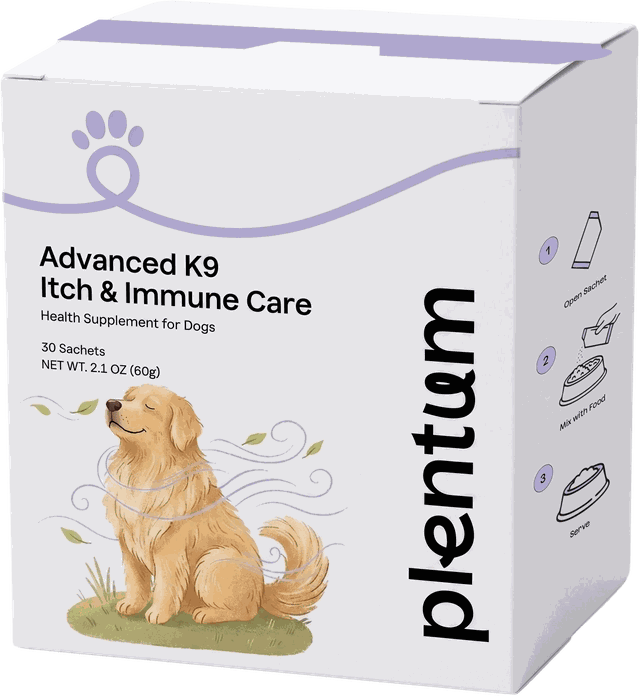
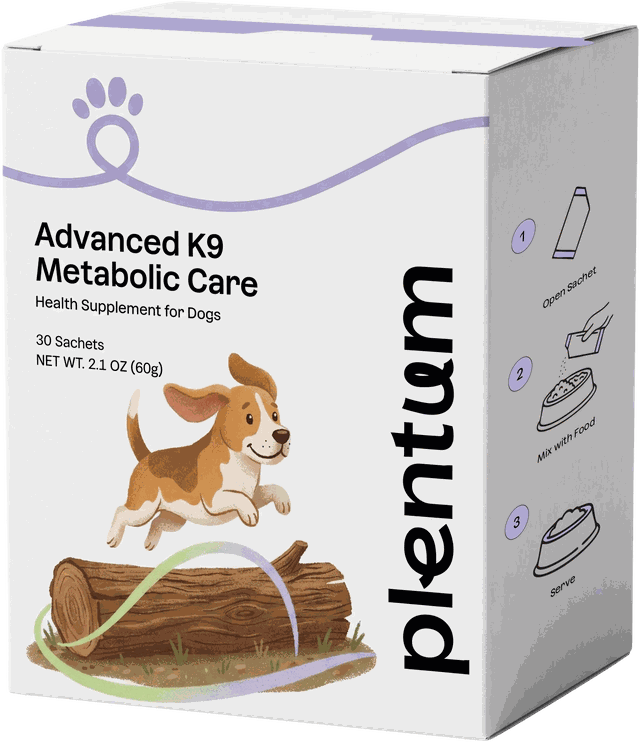
Plentum Advanced K9 Itch & Immune Care supports healthy skin and coat and a normal immune response to seasonal triggers.
It contains milk-derived colostrum.
Flea control comes first, and the supplement is daily support once a vet has ruled out a medical cause.
Follow the weight-based directions on the label.
Our dog itch, paws, skin, and ears guide covers the wider picture.
For a spot that has turned raw, read dog hot spots.
Sources
Frequently asked questions
Can flea allergy cause itching when no fleas are found?
Yes. A sensitive dog may have few detectable fleas, especially after grooming. Flea control and examination still matter.
Why does the itch sit at the rump and tail base?
Merck describes the lower back, tail base, and back thighs as a characteristic distribution.
The pattern supports suspicion but does not establish a diagnosis.
Do I need to clean the home as well as the dog?
Yes.
Fleas and their eggs and larvae spread through bedding and carpet, so the home needs cleaning as well as the animals.
Is Plentum Advanced K9 Itch & Immune Care a flea control product?
No.
It is a daily supplement that supports healthy skin and coat.
Flea control comes from a vet-prescribed plan.
Photo credit
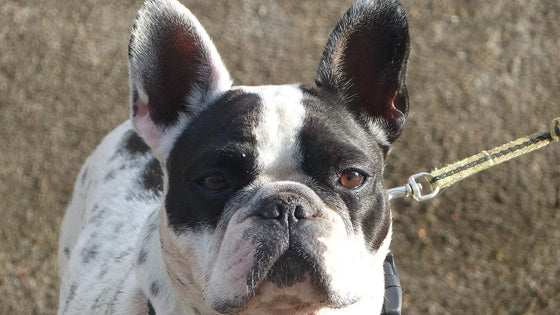
Photo: Aaron Barnaby aaronbarnaby.
CC0. Cropped to 16:9. Illustrative photograph.