






A dog can itch hard with no fleas in sight, because flea allergy can cause intense itching from only a few bites.
Mites, environmental allergies, food reactions, and skin infections can also cause itching without visible fleas.
See a vet if the itching continues, keeps coming back, or breaks the skin.
Why can a dog itch with no fleas?
A dog with flea allergy reacts to flea saliva.
Few fleas may be found, especially after grooming.
A flea check helps, but its result cannot identify or exclude every cause of itching.
Which causes might the vet investigate?
Parasites, infection, and allergies can produce overlapping signs.
The vet considers the location, timing, flea-control history, and skin samples.
Food allergy cannot be diagnosed from the body area alone.
The table helps you describe the affected areas and possibilities to discuss.
| Where the itch is | Possible causes |
|---|---|
| Paws, ears, and face | Environmental allergies, yeast, mites |
| Rump and tail base | Flea allergy, the classic pattern |
| Belly and armpits | Food reactions, skin infection, contact irritation |
| All over the body | Mites, allergies, dry skin |
How do skin infections and mites fit in?
Scratching and allergic inflammation can accompany secondary skin infection.
Bacteria and yeast can move into raw or irritated skin, so the itch continues even after the first trigger is gone.
Mites are too small to see clearly, and a vet may need a skin scraping to confirm them.
The AKC guide to mange explains how these mites are identified and why they itch.
What can you check at home?
A few simple checks help you describe the problem clearly.
Keep brief notes so you can share the details at the vet visit.
- Part the coat on the rump, belly, and paws
- Check for flea dirt on a damp white paper towel
- Note whether the itch worsens after walks, meals, or in certain seasons
- Write down any recent changes to food, bedding, or cleaning products
- Take photos of the skin on a bad day
When should you call the vet?
- Open sores, bleeding, or a strong odor
- Hair loss, scabs, or raw patches
- Itching that keeps your dog awake at night
- Ear discharge, head shaking, or a smell from the ears
- Fever, lethargy, or loss of appetite
A veterinary examination and appropriate tests guide the care plan.
How does Plentum fit?
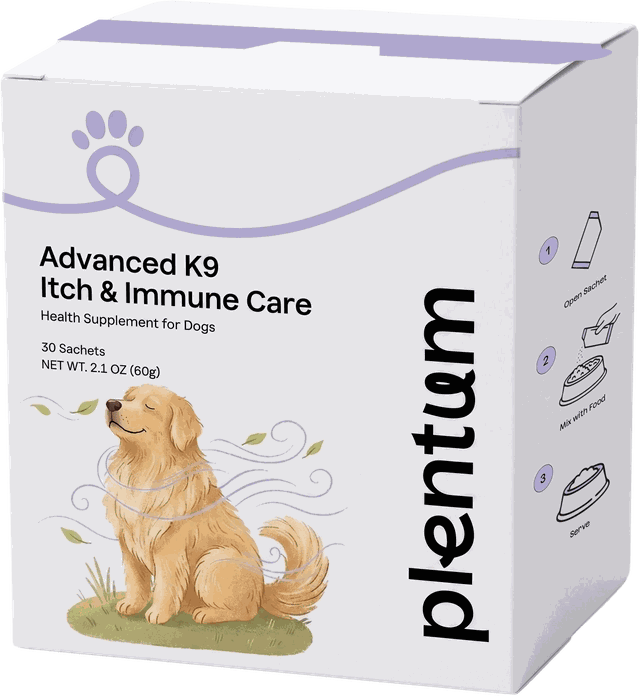
Plentum Advanced K9 Itch & Immune Care supports healthy skin and coat and a normal immune response to seasonal triggers.
It contains milk-derived colostrum.
Find the cause first, and add the supplement as daily support once a vet has ruled out a medical cause.
Follow the weight-based directions on the label.
Every lot is lab-tested, so you can check the details on our quality testing page.
Our dog itch, paws, skin, and ears guide covers the wider picture.
If the itch never stops, read why your dog is constantly scratching.
Sources
- Merck Veterinary Manual: Flea allergy dermatitis in dogs and cats
- Merck Veterinary Manual: Itching (pruritus) in dogs
- AKC: Mange in dogs
Frequently asked questions
Can a dog be allergic to fleas without seeing any?
Yes.
A dog with flea allergy can react to only a few bites, and fleas are small and easy to miss.
Check for flea dirt and look closely at the rump and tail base.
Can mites cause itching without fleas?
Yes.
Some mites cause widespread itching; others cause localized hair loss.
A vet may use skin scrapings and other tests.
A negative scraping does not exclude every mite infestation.
Could the specks be fleas or dandruff?
They can be difficult to distinguish at home.
Flea dirt dissolves reddish brown on damp paper, but a vet should assess persistent itching or skin changes.
Photo credit
Photo: Brandon Day daybrandon.
CC0. Cropped to 16:9. Illustrative photograph.