





At home, keep a consistent bathing, paw-rinsing, and observation routine alongside your vet’s itch plan.
Discuss costs before changing prescriptions.
One owner wrote on Reddit, "I just need reassurance that this isn't a hopeless situation."
Another said, "we've done it all."
If you've changed the food, bought the creams and switched shampoos, you're in very good company.
This guide covers long-term seasonal itch and daily care alongside your vet’s plan.
It also explains how to manage care costs.
How do you plan daily care for seasonal itch?
Most seasonal itch in dogs comes from an overactive reaction to things in the environment, like pollen, grass and mold.
Vets usually call it atopic dermatitis, and it tends to last for the dog's whole life.
Nobody can promise it will go away for good, and anyone who does is selling something.
The good news is that "managed" works. Many dogs with this pattern live comfortably.
A consistent routine can help manage their difficult seasonal periods.
Think of it like hay fever in people: it comes back, and you get better at handling it every year.
Your vet's plan is the backbone.
Prescription medication, a diagnosis and any allergy workup belong with your vet.
We agree with the commenter who said, "Go to your vet."
Everything below sits alongside that plan and doesn't replace any part of it.
What can daily care add to your vet’s plan?
One owner said a medication gave only "minimal relief."
If that sounds familiar, ask what else you can do around it.

- Wipe your dog's paws and belly with a damp cloth after every walk during high-pollen weeks.
- Wash bedding in hot water once a week, and twice a week at the peak of the season.
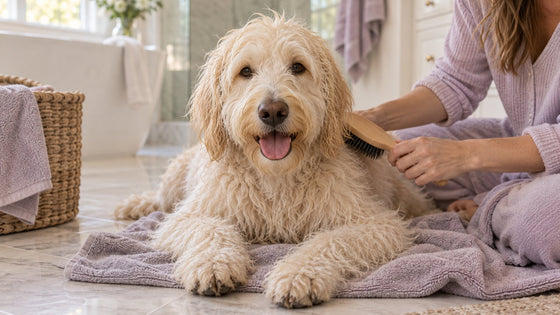
- Brush your dog a few times a week to lift pollen and loose hair out of the coat.
- Keep your dog on year-round flea control that your vet recommends, because a few bites can set off days of itching in an allergic dog.
- Keep the food steady, and add only one new thing at a time so you can tell what's helping.
- Keep a short log of scratching, licking and sore spots, rated 1 to 5 each day, so your vet sees a pattern instead of a guess.
That last step is the one owners skip, and it's worth the 30 seconds.
A log shows your vet whether a change helped, which saves you from paying to repeat what already didn't work.
Our seasonal itch care routine covers pollen-season habits.
The bath and grooming guide explains bathing and brushing.
Keeping costs down without cutting corners
Itch care costs can be difficult to manage.
One owner wrote they had “drained all my savings and have gone into debt.”
Asking your vet about cost is a normal conversation.
A good clinic would much rather adjust the plan than have you quietly skip doses.
| What to do | How it helps |
|---|---|
| Ask whether a generic or alternative version exists | Ask your vet whether the option fits |
| Plan visits ahead of the season | Plan rechecks before problems become urgent |
| Bring your itch log | Your vet spends the appointment on decisions rather than on history |
| Ask about a written plan with steps | Agree on which signs require a call |
| Compare pharmacies and refill timing | Ask about an outside-pharmacy prescription |
| Consider pet insurance while your dog is healthy | Most plans exclude conditions that showed signs before you enrolled |
| Ask about payment plans | Many clinics offer them, and some vets know about local assistance funds |
Your vet can tell you if one fits your dog, and you never switch on your own
One planned recheck in March costs less than an urgent visit in June
You know which signs mean a call and which mean waiting a few days
Your vet can write a prescription for an outside pharmacy if you ask
Discuss costs with your vet before changing prescribed medication.
They can help adjust the plan while managing flare risk.
After the licking stops: what to keep doing
One owner described how, on medication, "she stopped licking and scratching COMPLETELY."
That's a great result, and it raises a fair question about whether the rest of the routine still matters.
It does, though it can get lighter.
Skin and coat run on nutrition, and the medication doesn't supply that.
Keep the paw wipes and the bedding wash going through your dog's usual season.
Keep brushing, keep the food consistent, and keep the log.
A consistent care routine gives your vet useful context.
They can use it when deciding whether to adjust medication.
Hot spots and sore skin: when to call
Another owner described a dog "very prone to hot spots" who "licks himself a ton."
Hot spots are red, wet, painful patches that can grow within hours.
A dog who licks constantly can turn a small irritation into one overnight.
Call your vet the same day if you see any of these:
- A patch that is wet, oozing or smells bad
- Skin that looks raw, or fur that falls out in clumps
- Head shaking, ear pain, or a strong smell from the ears
- Itching that keeps your dog from sleeping
- Any sign of pain when you touch the area
Until you can get in, keep your dog from licking the spot with a soft cone or a clean t-shirt.
Don't put human creams on it unless your vet says to.
The gut-skin axis article explains how food and the gut can feed into skin trouble.
Where daily support fits for an itchy dog
If your vet is comfortable with it, a daily supplement can sit alongside the plan.
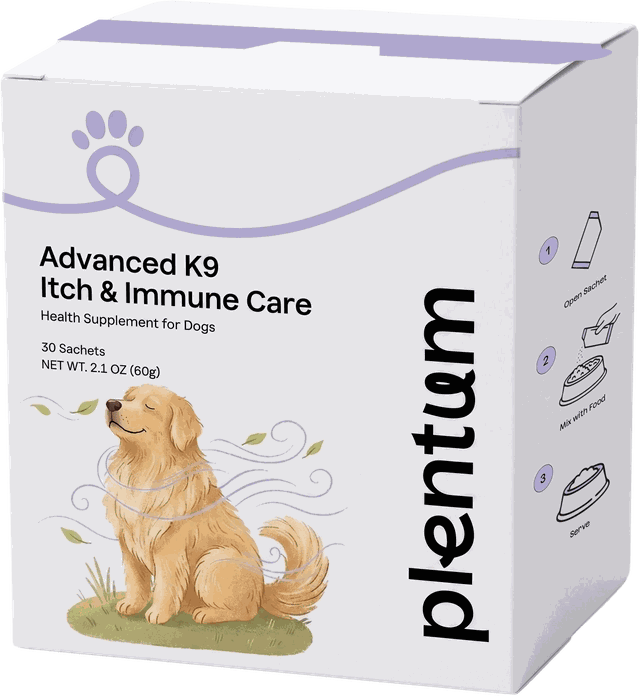
Advanced K9 Itch & Immune Care supports a normal immune response to seasonal triggers and healthy skin and coat.
You stir it into the food your dog already eats, so the routine stays easy.
Give it a few weeks before you judge it, and add it to your itch log.
The supplement comparison shows how it differs from the other four.
Vet plan alone or with daily home support
Home care supports the plan your vet sets, and it never replaces diagnosis or prescribed care.
| Option | How it works | Best fit |
|---|---|---|
| Vet plan alone | Follow prescribed care and recheck dates as directed | Fits a dog who needs diagnosis first |
| Vet plan plus home coat care | Add paw wipes, brushing and bedding washes at home | Fits seasonal itch with pollen on the coat |
| Vet plan plus home and nutrition support | Add daily nutrition support for skin and coat | Fits a full-season routine your vet approves |
Our seasonal skin and coat guide covers daily home care alongside your vet’s plan.
FAQ
Apoquel only gives minimal relief. What can I do alongside it?
Tell your vet when relief fades. Between visits, rinse paws, wash bedding, and log itch.
We've changed diets, creams and shampoos and done it all. What's left?
Ask your vet to review the pattern and possible triggers. Change one thing at a time and log results.
Is there a permanent fix for seasonal allergies, or is it hopeless?
Seasonal allergies usually need ongoing management. A vet plan and steady home care can help.
Itchy-dog vet bills drained my savings. How do I manage the cost?
Tell your clinic about cost limits and ask about lower-cost options. Never change a prescription yourself.
She stopped licking completely on medication. Do I still need daily skin support?
Daily skin care still matters when medication helps. Keep grooming and food consistent.
My dog is prone to hot spots and licks himself a ton. What helps?
Raw, wet, or smelly skin needs a same-day vet visit. Keep it clean and dry, and block licking.
Sources
- VCA Animal Hospitals. Atopy in dogs. VCA Animal Hospitals
- VCA Animal Hospitals. Hot spots in dogs. VCA Animal Hospitals
- American Kennel Club. Dog allergies. AKC
- Treatment of canine atopic dermatitis, updated guidelines from the International Committee on Allergic Diseases of Animals. PubMed 26276051
- Canine atopic dermatitis, detailed guidelines for diagnosis and allergen identification. PubMed 26260508