





Your dog's muzzle is going gray, the stairs take a little longer, and you've started wondering whether a supplement could buy you more good years together.
Longevity supplements for dogs don't add years to a dog's life, and no supplement has been shown to extend lifespan on its own.
What to know before you buy
- "Longevity supplements" for dogs are healthspan tools. None of them is a magic pill or a life-extension drug.
- Lifespan is how long your dog lives. Healthspan is how many of those years are comfortable, mobile, and mentally sharp.
- Omega-3s, dietary antioxidants, and gut-supporting fibers have the most research, with mixed or modest effects.
- Look for clear dosing and a supplement built for dogs, match it to your dog's needs, and give it a fair, monitored trial.
- Weight, diet, exercise, dental care, and regular vet visits matter more than any supplement.
The science behind longevity supplements for dogs
The research points to healthspan support: nutrients that may help maintain the systems that wear down with age, like the gut, cognition, and the body's response to oxidative stress.
The strongest evidence sits behind a handful of well-studied ingredients (omega-3 fatty acids, dietary antioxidants, and gut-supporting fibers and probiotics). Even these work best on top of good nutrition, a healthy weight, exercise, and regular vet care.
What "longevity" actually means for a dog
Marketing tends to blur two ideas. Lifespan is how long a dog lives. Healthspan is how many of those years your dog spends comfortable, mobile, sharp, and still excited about the walk.
Aging in dogs, as in people, comes from overlapping processes:
- Rising oxidative stress
- Low-grade chronic inflammation sometimes called "inflammaging"
- Cellular wear in tissues like cartilage and brain
- Shifts in the gut microbiome
How dogs age at the cellular level
You don't need a biochemistry degree to see why certain ingredients keep showing up in longevity research. A few core mechanisms explain most of it.
Oxidative stress
Every cell makes unstable molecules called free radicals while turning food into energy. In small amounts they're normal and even useful.
Over a lifetime the balance can tip, and built-up oxidative damage is thought to contribute to aging throughout the body. That's the reasoning behind dietary antioxidants, which may help the body neutralize some of the excess.
Chronic low-grade inflammation
Aging comes with a persistent, simmering inflammatory state, more of a quiet background hum than the sharp inflammation of an injury.
Over years it may affect joints, the brain, and other organs.
Tissue-specific wear
- Joint cartilage doesn't regenerate quickly.
- Brain neurons are sensitive to oxidative and inflammatory stress.
- The gut lining is constantly renewing under pressure from diet and microbes.
Different ingredients target different tissues, so one product rarely covers everything.
Where supplements fit
A longevity supplement sits on top of the basics and never replaces them.
It makes sense once your dog's weight, diet, exercise, and vet care are in good shape, and when you have a clear goal like gut support or skin and coat condition.
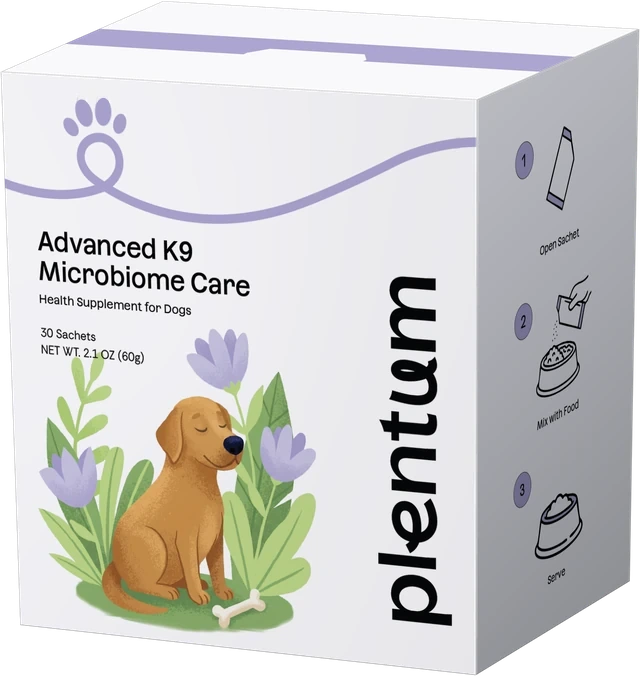
Our daily foundation collection starts with Microbiome Care, a postbiotic and prebiotic powder for everyday gut, oral, and coat support. If your dog's carrying a few extra pounds, see the healthy weight collection.
Ingredients with real research behind them
These come up most consistently in the veterinary nutrition literature.
| Ingredient group | What it's studied for | Caveat |
|---|---|---|
| Omega-3 fatty acids (EPA and DHA) | Skin and coat condition | Benefits depend on dose, oil quality, and the individual dog |
| Dietary antioxidants | Managing oxidative stress, cognitive support | More isn't better; megadoses may backfire |
| Gut-supporting fibers, prebiotics, and probiotics | Gut balance and whole-body wellness | Much of the work is still early |
Omega-3 fatty acids (EPA and DHA)
EPA and DHA, the long-chain omega-3s in fish oil, are among the most studied supplements in canine nutrition. Research suggests they may support skin and coat condition, and possibly parts of cognitive and heart health in aging dogs.
It's one of the better-supported categories, but results depend heavily on dose, the quality and freshness of the oil, and the dog. Omega-3s can interact with certain medications and conditions, so settle the dose with your vet instead of guessing.
Dietary antioxidants
Vitamin E, vitamin C and certain plant compounds are studied for helping the body manage oxidative stress. They often come up alongside cognitive support, since the brain is especially sensitive to oxidative damage.
For a closer look at older dogs and nutrition, read our senior dog vitamins guide.
More isn't better here. Antioxidants work as a balanced system, and very high doses of isolated antioxidants haven't been shown to help and may backfire. A well-formulated diet already supplies many of them, so a supplement should fill real gaps instead of stacking megadoses.
Gut-supporting fibers, prebiotics and probiotics
The gut is increasingly seen as a hub that connects to other systems, including immunity and, through the gut-brain axis, mood and behavior. Much of this work is still early, but the gut is a logical place to focus as your dog ages.
What the research doesn't show
No supplement has been proven to extend a dog's lifespan. Studies in this area are usually short and often small, and they measure markers or comfort over weeks or months instead of whether dogs live longer.
Claims that a product "adds years" go well past the evidence.
Supplements don't replace the fundamentals. The habits most strongly linked to a longer, healthier life are unglamorous:
- A lean body condition
- A complete and balanced diet
- Regular exercise
- Dental care
- Routine checkups that catch problems early
A supplement on top of those is a reasonable add-on. A supplement instead of them is a poor trade.
And research on an ingredient isn't research on a finished product. An ingredient can have studies behind it while the specific product in the bottle has never been tested, so check which one a claim is talking about.
How to evaluate a longevity supplement without getting hyped
- Check for clear dosing. A credible label tells you how much of each active ingredient is in there, beyond saying it's "included." Amounts matter, especially for omega-3s.
- Stick with supplements built for dogs. Their needs and tolerances differ from ours, and products formulated and dosed for dogs are a safer starting point.
- Match the product to your dog. A young, healthy dog may need very little. An older dog with a sensitive stomach or cognitive changes may benefit from targeted support, and your vet can help you prioritize.
- Give it a fair, monitored trial. Most supportive ingredients take weeks to show any effect. Track coat, digestion, and energy instead of running on hope, and revisit the decision with your vet.
What should longevity supplements for dogs support?
Look for a supplement that supports normal oxidative-stress resilience, skin and coat condition, and stool consistency, with clear dosing that fits your dog's age, diet, medications, and vet plan.
Daily use only works when the format, serving size, and label instructions are easy to repeat.
The foundation that matters most
Supplements play a supporting role. The biggest, most reliable contributions to a long, comfortable life come from a healthy weight, a balanced diet for your dog's life stage, daily movement, mental enrichment, dental and preventive care, and a vet who knows your dog.
Within that framework, a well-chosen, well-dosed supplement may add real support for specific systems as your dog ages. Outside it, even the best one does little. A long, good life is built from lots of small, steady choices, and a supplement is one of them.
Frequently asked questions
Are there supplements that help slow down the aging process in dogs?
No supplement has been proven to slow aging or extend a dog's lifespan. Some ingredients, like omega-3s, are studied for supporting the systems that decline with age, and the effects are usually modest and vary by dog.
What supplements extend dog lifespan and quality of life?
None has been proven to extend lifespan. For quality of life, omega-3s, dietary antioxidants, and gut-supporting fibers have the most research, and they work best alongside a healthy weight, good nutrition, exercise, and regular vet care.
How do supplements help aging dogs stay healthy?
They may support specific systems, like the gut, cognition, and the body's response to oxidative stress.
What dog supplement is best for long-term health support?
It depends on your dog's age, diet, medications and needs, so there's no single answer. Look for clear dosing, a supplement built for dogs and a fair, monitored trial, and let your vet help you prioritize.
What supplements support healthy aging in dogs?
Omega-3 fatty acids, dietary antioxidants, and gut-supporting fibers are the groups most discussed in veterinary nutrition. A well-formulated diet already supplies many of these nutrients, so a supplement's job is to fill real gaps.
Sources
Primary veterinary reference
Use this guide alongside the WSAVA Global Nutrition Guidelines and the advice of the vet who knows your dog.