









You gave the chews a fair try, the shaking and pacing are still there, and now you wonder whether any calming product is worth another $30.
One owner wrote on Reddit, "we've tried busy butter and other calming chews without much success." Another said, "Thunder shirt didn't help." If that sounds like your house, your skepticism is reasonable.
This guide explains why so many calming chews look and perform alike, what a realistic result is, and what to adjust before you buy anything else. It also covers when the vet should take over.
Why so many calming chews look alike on the label
Open 5 calming chew labels and you'll find the same small group of ingredients: melatonin, L-theanine, chamomile, hemp, tryptophan and a vitamin or two. Another owner put it this way: "the active ingredients are the same handful of compounds." They're right, and that's why switching from one chew to another often changes nothing.
What differs is the amount, the form and the extras. A chew can list L-theanine and still contain only a token dose. If you can't see how many milligrams of each active you're giving, you can't compare products. You also can't tell a real supplement from what one owner called "label theater."
Are calming chews snake oil?
Some owners say they are, and the evidence for calming supplements in dogs is thinner than the marketing suggests. Most studies are small, and several are funded by the companies that make the products. That doesn't mean nothing works. It means you should expect modest effects and judge by your own dog.
A few ingredients have more behind them than others. L-theanine and a handful of calming amino acids have been studied in dogs, and the gut-brain connection is an active research area. No supplement replaces a behavior plan, and none works on every dog.
What a realistic result looks like
A fair goal is the one a commenter described as "a noticeable improvement not a transformation." Your dog might settle faster after a loud noise, pace less in the car or recover sooner when guests leave. A supplement won't turn a storm-phobic dog into a relaxed one.

Pick one or two behaviors you can measure before you start. Count how many minutes your dog pants during a car ride, or note how long the shaking lasts after the first thunder. Keep a consistent record and bring it to your vet when you discuss how your dog is doing.
Follow the label and prepare for stressful events
Follow the directions for the product you use. Keep a safe space ready and bring persistent or severe distress to your vet."
Follow the directions on the product label and keep a record of the behaviors you notice. Pair that routine with a quiet space and a plan for the stressful event.
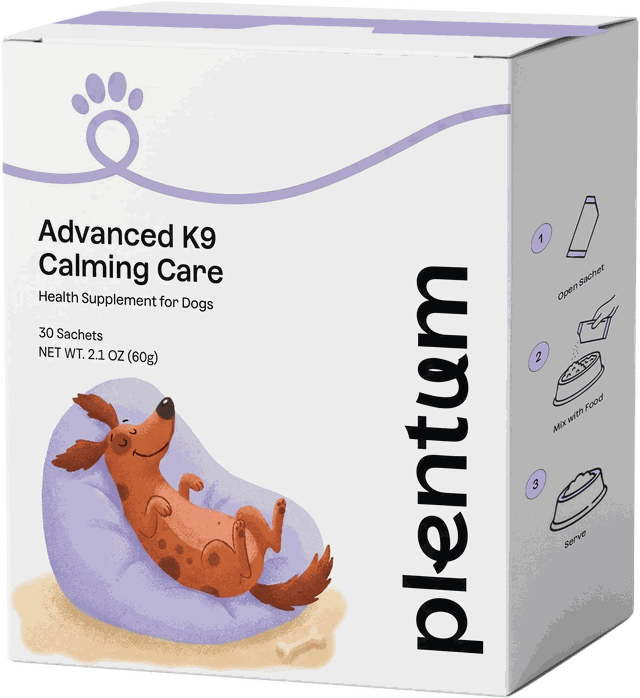
If chews haven't worked for your dog, our guide to daily calming support for storms and travel explains the supplement and practical ways to prepare for stressful events.
Our settle-at-home plan goes into a step-by-step plan to help a dog settle at home.
What to change before you change products
Review the product directions, your dog's routine, and your behavior notes with your vet before choosing another supplement:
- Check that your dog is eating the full dose, since chews that get dropped or shared with another dog deliver less than you think.
- Follow the product label and keep your tracking consistent.
- Set up a quiet room for storm nights with a white noise machine, and cover the crate if your dog already likes it.
- Walk and play hard earlier in the day, because a tired dog copes better.
- Keep your own tone calm and normal, and comfort your dog if he asks, since comforting him won't make the fear worse.
- Stick with one product, because rotating brands every time one goes on sale makes it impossible to tell what's helping.
Reading a calming label: amounts, forms and what to skip
Turn the package over and compare it to this list. A label that gives exact amounts for every active earns more trust than one that shows only a total.
| Label detail | Good sign | Red flag |
|---|---|---|
| Active amounts | Each active listed in mg per serving | No amount listed for an active |
| Serving size | Dosed by your dog's weight | One chew for every dog |
| Ingredient forms | Named forms, such as L-theanine | "Calming herbs" with no names |
| Extra ingredients | Each item named on the label | Items listed without names |
| Batch testing | Lab results available on request | No testing information anywhere |
| Promises | "Supports a calm demeanor" | "Ends fear for good" or "stops barking" |
Skip anything that promises to stop a behavior outright. Be careful with hemp and CBD products too, since quality varies a lot.
When your vet should take the lead
Some owners in those threads point straight to the vet, and they're right for some dogs. A supplement is a good fit for mild to moderate, occasional stress, and it's the wrong tool for a dog that hurts himself, destroys the house or panics for hours.
A fear that is new and sudden needs an exam, because pain and illness can look like fear. Your vet can rule those out and discuss behavior medication or a trainer if your dog needs more than a supplement can give.
If you'd like to compare it against the other supplements first, the supplement comparison lays out each one, and our quality page explains the lot testing. For more on choosing a product, read our guide to selecting a calming supplement, and see daily routines that support a calm dog. If a specific event is coming up, this fireworks plan works for storms and travel too.
How calming labels list amounts
You can compare products fairly only when each label shows what one serving actually provides.
| Option | How it works | Best fit |
|---|---|---|
| Each active listed by amount | Every ingredient shows milligrams per serving | You can match the serving to your dog's weight |
| An active with no amount listed | The label names the ingredient but gives no weight | You cannot tell how much of each active you give |
| No amounts listed | Ingredients appear without any serving amounts | You have no way to compare strength across brands |
FAQ
Do calming chews even work, or are they snake oil?
Calming supplements support a calm, relaxed demeanor during occasional stress. Keep behavior notes alongside your training and safe-space plan.
We tried calming chews, Busy Butter and a ThunderShirt without much success. What's next?
Check the dose, the timing and the consistency before you buy something new. Then write down 1 or 2 behaviors you can measure, and ask at your next appointment whether a behavior plan or a prescription option makes sense.
Are all calming chews the same thing in different packaging?
Many share the same handful of ingredients, so the amounts and forms are what set them apart. Choose a label that shows each active in milligrams and doses by weight.
What result is realistic from a calming supplement?
Expect a noticeable improvement, not a transformation. Your dog may settle sooner after a trigger or pace less in the car. A dog with severe fear needs a vet visit as well.
Is it OK to rotate calming brands whenever one is on sale?
Introduce one change at a time so your notes are useful. Follow the label directions and discuss those notes with your vet before changing supplements.
Is there any real evidence behind dog supplements?
The evidence varies by ingredient, and it's strongest for a small number of them. Be wary of any brand that claims proof for a finished product.
Sources
- American Kennel Club. Popular dog supplements. AKC
- U.S. Food and Drug Administration. Animal food labeling and pet food claims. FDA
- WSAVA. Global nutrition guidelines. WSAVA
- Noise fears in dogs, a review of the current evidence for practitioners. PubMed 38067015