









Quick answer: Senior dog gut care starts with a full review, not a quick fix. Check the diet, medications, dental comfort, activity and health history with your vet first. Track stool, appetite, nausea, weight and thirst in one place. Change one thing at a time, and avoid adding fiber or microbes while weight loss or repeat digestive signs are still unexplained. Blood, black stool, dehydration, pain, persistent vomiting or steady weight loss need a vet promptly.
Key takeaways
- Older dogs often need a full review of food, medications and dental comfort before any gut change.
- Track stool, appetite, nausea, weight and thirst on a dated record that every caregiver can read.
- Change one variable at a time, so you can tell what helped and what did not.
- Weight loss or repeat digestive signs should be investigated before fiber or microbes are added.
- Blood, black stool, dehydration or persistent vomiting needs a vet the same day.

Digestive care for older dogs with changing tolerance
An older dog may tolerate food, medication and routine differently than it did a few years ago. The gut is not the only system involved. Teeth, joints, kidneys, liver and the heart can all change how a dog digests and absorbs what it eats.
That is why digestive care for senior dogs starts with the whole picture. A change that looks like a stomach problem may come from pain, dental discomfort or a medication that is not sitting well. Your vet can help sort out which is which.
First decision: review the complete diet, medications, dental comfort, activity and disease history
Make this decision visible to everyone who shares care. Agreement at the start prevents conflicting choices about food, medication or activity later on.
Bring a complete list to the vet: every food and treat, how each is served, all medications with their timing, dental care and any chewing difficulty, how much the dog moves, and any past diagnoses. The vet can then decide what to change, and in what order.
A caregiver should be able to say why each item is on the list. If something cannot be explained, ask the vet before it goes into the plan.
Build a household-ready plan
A plan should state who does what, when each task happens and what gets recorded. Consistency matters more than an elaborate routine that no one follows.
Write down the feeding times, the portions, the medication schedule and the bathroom routine. Keep a single shared record for changes, and date each entry. A stable baseline is what lets you tell a real change from an ordinary good or bad day.
Avoid this failure mode: adding fiber or microbes before investigating weight loss or recurrent signs
Adding a new product when the cause is unknown blends cause, response and coincidence together. If the dog is losing weight, or the same digestive sign keeps coming back, the first step is a vet exam, not a new ingredient.
Once the cause is clearer, the vet can suggest whether fiber, a change of diet or a microbe-based routine makes sense. Change only one variable at a time, so the result is easy to read.
Keep the handoff short
A dated note, a label photo and a short video often communicate more than a long description from memory. Use a compact handoff sheet at every change of caregiver:
- Question: Has the complete diet, medication list, dental comfort, activity and health history been reviewed this month?
- Known risk: Adding fiber or microbes before the cause of weight loss or repeat signs is known.
- Evidence to collect: Stool, appetite, nausea, weight, thirst, medication timing and diet changes.
- Handoff threshold: Blood, black stool, dehydration, pain, persistent vomiting or steady weight loss.
Measure stool, appetite, nausea, weight, thirst, medication timing and diet changes
Link each measure to daily comfort. Stool consistency, how much the dog eats, whether it seems queasy, how it is holding its weight and how much water it drinks are all easy to record in under a minute.
Weigh the dog at the same interval and on the same scale when you can. Record normal days as well as hard days, so a change is easy to see when it happens.
Where supplements fit
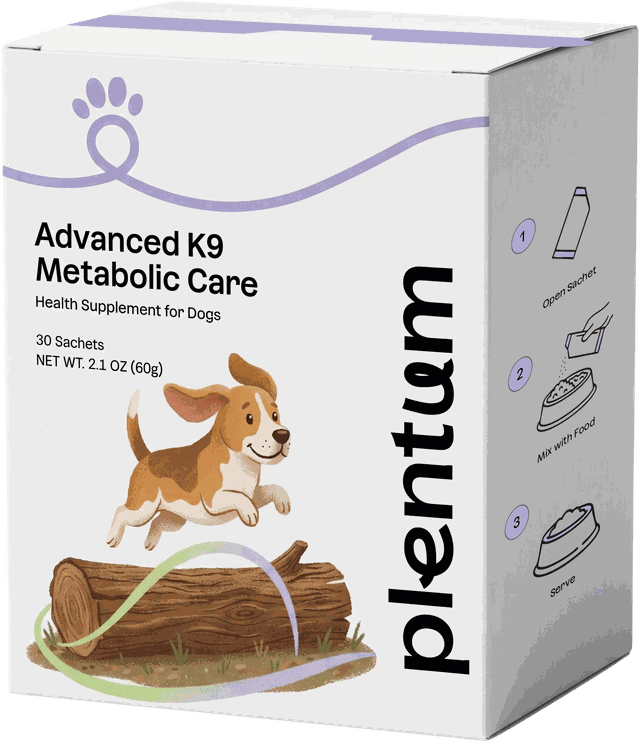
A supplement is one possible part of a gut routine, and it should be discussed with your vet before it is added. It is not a substitute for a diet review, a dental check or a look at weight loss and repeat signs.
Give any new item on its own schedule, and write down the date you started it. That way, if something changes, you know what else was happening at the time.
Supplement, not a medicine. Ask your vet if your dog has a health condition or takes medication.
Escalation trigger: blood, black stool, dehydration, pain, persistent vomiting or progressive weight loss
Agree on two things in advance: how often to check in, and which signs need a call to the vet the same day. Write both into the household plan.
Seek emergency care for breathing difficulty, collapse, uncontrolled bleeding, repeated unproductive retching, a rapidly swelling abdomen, severe pain or an inability to urinate. Do not give human medication unless a veterinarian or an animal poison professional directs it.
Some medications can upset the stomach. Ask your vet whether a medication should be given with food, and never change the timing or dose on your own.
Frequently asked questions
What is the first step in senior dog gut care?
Start with a full review of the diet, medications, dental comfort, activity and health history with your vet. That review shows which changes are worth making and in what order. Avoid adding new products until the cause of any weight loss or repeat signs is clearer.
What should caregivers track each day?
Track stool, appetite, nausea, weight, thirst and medication timing, plus any diet changes. Use one shared record and date each entry. A simple daily note is usually enough, and it gives the vet a clear picture at each visit.
Why should only one thing change at a time?
If several things change together, you cannot tell which one helped or caused a problem. Changing one variable at a time keeps the result readable. It also makes it easier for your vet to decide the next step.
When is a digestive change an emergency?
Call the vet the same day for blood, black stool, dehydration, persistent vomiting, severe pain or steady weight loss. Seek emergency care for collapse, breathing difficulty or an inability to urinate.