






Persistent stool changes, gas, and discomfort can justify a diet review before choosing digestive support.
Repeated vomiting, blood, collapse, or a swollen belly needs prompt veterinary care.
Hold off for a minute. Some signs mean skip the supplement and call your vet.
Others are quieter, and they are the reason owners start asking about digestive support at all.
This guide covers both, so you can tell which situation you're in.
Start with the 7 signs that a digestive supplement is the wrong next step.
Review food, medications, and recent changes first.
Blood, collapse, a swollen belly, repeated vomiting, or rapid decline needs prompt veterinary care.
Keep these four points in mind:
- A digestive supplement is a poor first step when a dog has blood, collapse, a swollen belly, or repeated vomiting.
- Sort out the diet, medication, and recent changes before adding any new product.
- Avoid starting several products at once during an unexplained illness.
- Quieter day-to-day signs, like gas or stool that keeps changing, are where a supplement conversation with your vet usually starts.
Which track is your dog on?
- Call your vet todayBlood, collapse, a swollen belly, repeated vomiting, refusing food, or a fast decline
- Track it, then talkStool that changes day to day, gas on most days, lip smacking, posture, coat, and mood
- Support the routineDiet settled, vet has weighed in, one new thing at a time on an ordinary day
Treat a digestive sign as a question first
Soft stool, gas, vomiting, and appetite changes have many possible causes.
These include diet, infection, parasites, medication, inflammation, and other illness.
A supplement can't tell those apart, and it shouldn't push back a vet visit that's due.
See when to leave it in the cart.
-
1. The problem is new, getting worse, or getting in the way
If any applies, call your vet to discuss the diet and whether an examination is needed.
A product can wait.
-
2. You can't say what else changed
Think back over the same few days.
A new food, treat, medication, or road trip can upset digestion.
A new household member or disrupted routine may also play a part.
If you can't answer, go find out rather than filling the gap with a guess.
One plain sentence in your notes helps: what you saw, when it started, and what you think set it off.
-
3. Your dog isn't eating, resting, moving, or pooping comfortably
That's the real test, and no phrase on a label answers it.
Daily function is what you and your family can watch change from one day to the next.
Our constipation guide lists points to discuss with your vet if your dog strains or passes hard stool.
-
4. You're already on product number two
This is the most common mistake: adding one thing after another while nobody knows the cause.
Adding several items makes it harder to tell what helped or worsened symptoms.
It may also obscure signs your vet needs to assess.
Trying more products at once also makes the vet's work-up harder.
-
5. You can't finish this sentence
"I'm trying this because ___, and I'll stop if ___."
If you can't name one fact that supports the step and one that would end it, it isn't ready yet.
-
6. Nobody has looked at the diet
A digestive supplement can be a reasonable later step for some dogs.
Later is the key word.
The diet should be sound first, and your vet should have weighed in.
-
7. Any of the warning signs are showing
Blood, collapse, a swollen belly, repeated vomiting, or rapid decline needs veterinary care.
The full list is at the end of this article.
Don't use a supplement to quiet a warning sign
Here is the trap owners fall into most often.
A sign keeps coming back, so another product gets added to quiet it.
Delaying an examination can postpone identifying pain, food intolerance, or illness. Do this instead.
Record the sign and compare it with your dog’s usual pattern.
Decide whether veterinary advice is needed before adding anything new.
Everyday signs that can point to a gut that isn't settling
None of these looks like an emergency, and every dog has an off day now and then.
Ongoing digestive trouble usually leaves clues, and they often show up well before a vet visit becomes necessary.
Track the pattern for a couple of weeks rather than reacting to one bad day.
-
Stool that changes from day to day
Variability is one of the clearest signs to watch.
Stool may soften during an exciting or stressful walk.
Record whether this pattern repeats.
Dry, hard, pebble-like stool can mean things are moving too slowly.
Mucus can accompany colon irritation.
Our stool mucus guide explains what to watch for if it recurs.
-
Gas, gurgling, and discomfort after meals
Some gas is normal.
Frequent gas or loud gurgling may point to a digestive problem.
Slower feeding and regular walks are the sensible first step.
For practical ideas, see dog gas remedies.
-
Lip smacking, surface licking, and grass eating
Nausea in dogs rarely looks like nausea in people.
Watch for quick, repetitive tongue flicks and for a dog that keeps licking floors, walls, or furniture.
Both can signal nausea or reflux.
Grass eating is common and does not always signal illness.
Mention it to your vet if it frequently accompanies other signs.
-
The prayer position
Some dogs stretch their front legs forward while raising their rear end.
Owners sometimes see this posture when a dog has abdominal discomfort.
If you notice it more than once, raise it with your vet.
-
Mood, coat, and skin changes that are easy to blame on something else
The gut and brain communicate in both directions.
Gut discomfort may accompany clinginess, noise sensitivity, or irritability.
A dull coat and itchy skin have many causes, including diet, parasites, and allergies.
When they show up alongside digestive signs, bring both to your vet, because the two can be connected.
Our signs of poor gut health guide goes deeper.

A dog that lingers over an empty bowl or stops drinking is a sign worth writing down.
When digestive support comes up
Owners usually raise a supplement with their vet at one of these points.
None of them is a reason to skip an exam.
- Puppies, from 12 weeks old and with your vet's OK, are still building their gut microbiome.
- Boarding, travel, or a busy vet visit is coming up, when a dog's digestion may be more sensitive.
- An antibiotic course can change the balance of gut bacteria, so ask your vet before adding anything during or after one.
- Older dogs may need more attention to digestion, which is worth reviewing as part of the yearly check-up described in the AAHA Canine Life Stage Guidelines.
What to track
Whatever you decide, keep a short log at about the same time each day.
Record food, medications, supplements, recent events, and the usual routine.
Separate the normal pattern from new changes and your response.
The trend is what matters, so keep the log short enough that you'll actually stick with it.
Fill lines in on normal days too, because a clean baseline makes a later change easier to read.
Start by describing what you're seeing, before you act on it.
Record when the sign began, its frequency and severity, and your dog’s food and medications.
If a step doesn't help answer that description, it probably adds noise rather than information.
| Measure | What it tells you |
|---|---|
| Severity | Mild, moderate, or severe, in your own words |
| Duration | How long the sign has lasted |
| Recurrence | Whether it comes back, and how soon after it stopped |
| Pain | Any sign of discomfort, like guarding the belly or flinching when touched |
| Hydration | How much your dog is drinking, and whether the gums feel dry |
| Weight | Same scale, same time of the week |
| Medication exposure | Every medicine, supplement, and flea, tick, or deworming product given, and when |
| Stool and vomiting | Shape, frequency, mucus, blood, and any vomiting after meals |
| Appetite and energy | Eating and drinking normally, and joining in with the family |
Set a review point
Before you start anything, decide when you'll check in and what would end the trial early.
Set a clear review point, such as a date or number of meals.
Blood or declining energy needs earlier advice.
Write it down.
Our gut improvement guide offers changes to track when your dog seems better.
Vet visit, food change, or supplement
Three different moves answer three different questions.
Putting them in the wrong order is what turns a short problem into a long one.
Where to put your effort first
| Question | Vet visit | Food and routine change | Extra support |
|---|---|---|---|
| What it answers | Why this is happening | Whether the diet or routine is the cause | Whether extra support helps |
| Start when | Any warning sign, or a change that keeps coming back | The diet or schedule changed recently | Your vet has weighed in and the diet is settled |
| Who decides | Your vet, with your notes | You, with one change at a time | You and your vet together |
| Main risk | Waiting too long to go | Changing several things at once | Using it to quiet a sign that needs diagnosis |
Where supplements fit
Consider supplements after reviewing diet, recent changes, and urgent signs.
Use those findings to guide the next step.
Our digestive supplement guide explains how to assess options.
Discuss how a product fits with food and medications.
Our dog gut health glossary decodes the terms you'll see on labels.
Add one new thing on its own, on an ordinary day, and stop if your dog's signs get worse.
Our gut supplement selection guide explains how to compare options.
Advanced K9 Microbiome Care combines prebiotic fiber, a postbiotic, colostrum, and omega-3.
The powder stirs into food.
The side-by-side comparison covers all five supplements, and the gut and digestion collection lists them together.
Call a vet for blood, collapse, a swollen belly, or rapid decline
Get emergency care for breathing difficulty, uncontrolled bleeding, severe pain, or inability to urinate.
Repeated unproductive retching or rapidly worsening signs also need emergency care.
Don't give human medication unless a vet or an animal poison professional tells you to.
This guide is general education.
Your vet should make decisions about your dog’s care.
They can assess the history, diet, medications, and examination findings.
Frequently asked questions
Is a digestive supplement a good first step for a dog with digestive upset?
A supplement can't tell the causes apart, so it shouldn't replace an exam.
Which signs mean I should call my vet instead of trying a product?
Blood, collapse, a swollen belly, repeated vomiting, dehydration, and rapid decline all need a vet promptly.
Pain, weight loss, and signs that keep coming back belong in that conversation too.
How many products should I try at the same time?
Start one at a time, ideally, and none during an unexplained illness.
Try several together and you'll never know what helped or what caused a problem.
How will I know whether a supplement is working?
Compare your dated notes with the baseline: eating, resting, moving, bathroom habits, and drinking.
Real progress shows up as a trend over time, not one good day.
What are the early signs of poor digestion in dogs?
Stool that changes from day to day, gas on most days, gurgling after meals, lip smacking, surface licking, and discomfort after eating.
Each one can mean nothing on its own.
A pattern that repeats is what makes it worth a conversation with your vet.
How should I start a digestive supplement safely?
Go low and slow.
Start at about a quarter of the recommended dose and build to the full amount over two weeks, following the product label.
If loose stools appear, drop back to the previous amount for a few days and note what changed.
Sources
Five supplements, each aimed at a different need
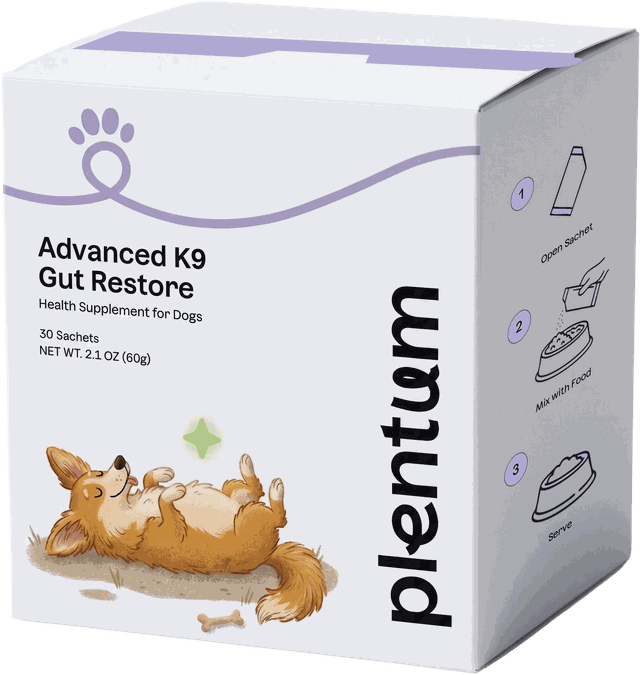
- Gut RestoreFits this guide It supports normal bowel function and healthy stool consistency, and helps maintain a balanced gut. From $1.50/day
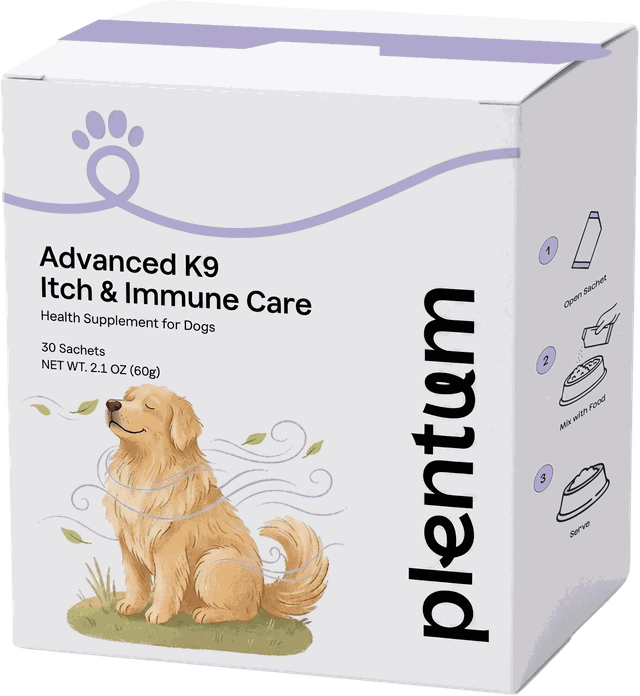
- Itch & Immune Care It supports a normal immune response to environmental and seasonal triggers, and helps maintain a healthy coat. From $1.50/day
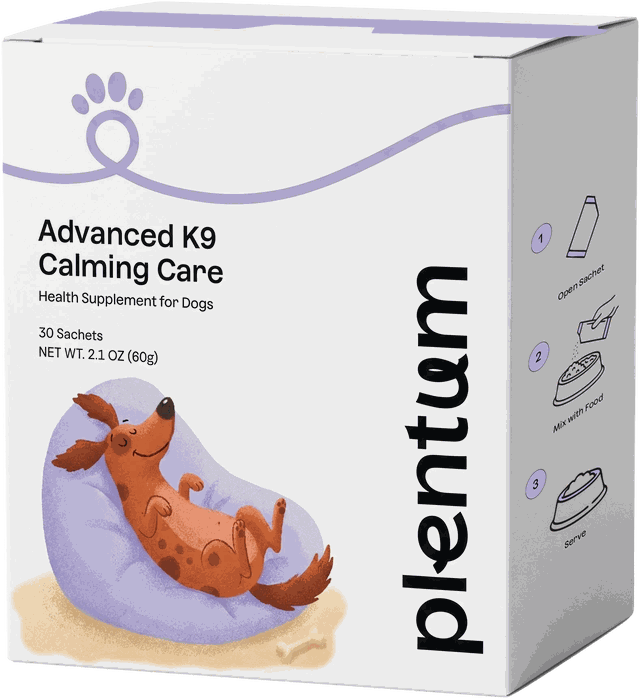
- Calming Care It supports a calm, relaxed demeanor during occasional situational stress such as storms, travel, or vet visits. From $1.50/day
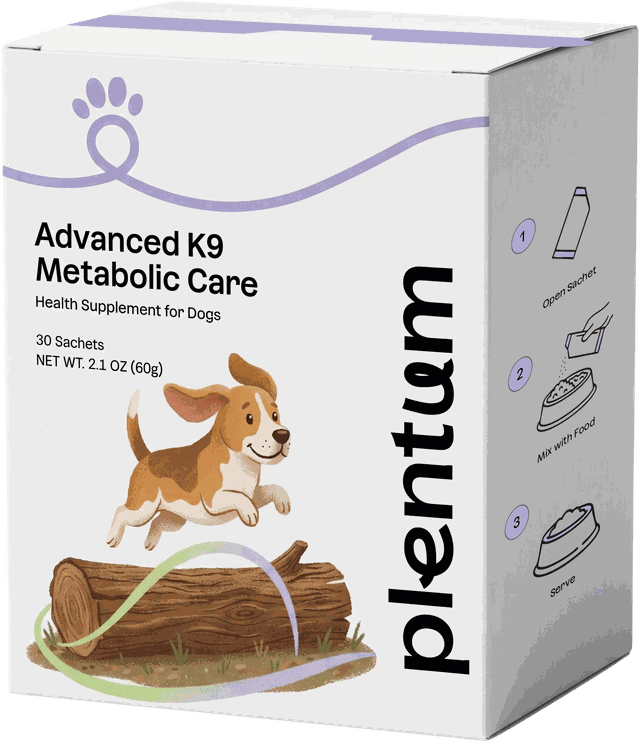
- Metabolic Care It supports healthy weight management alongside measured portions and daily exercise. From $1.50/day
- Microbiome Care It’s a daily powder with a postbiotic and prebiotic foundation, plus colostrum and omega-3, to support gut, oral, skin, and coat health. From $1.17/day