








To calm a dog, start with a predictable daily routine, short training sessions, and a quiet place your dog can rest.
Many dogs settle faster when they know what comes next and can retreat to a safe spot.
If nervousness appears suddenly or keeps coming back, a vet visit can rule out medical causes before you rely on any calming plan.
Which calm guide should you read?
Each guide covers one trigger, so start with the situation you see most.
The training ideas in this hub apply to all of them.
| If your dog | Read this guide |
|---|---|
| Panics or destroys things when left alone | Separation anxiety in dogs |
| Shakes, hides, or paces during storms and fireworks | Dog afraid of thunderstorms and fireworks |
| Whines, drools, or pants in the car | Dog anxious in the car |
| Stays wound up in busy homes or new places | How to calm an anxious dog |
Why training comes first
Supplements do not teach your dog what to expect, and training does.
Gradual exposure paired with rewards changes how a dog feels about a trigger over time.
Start at a low level, such as a sound played quietly from another room, and reward calm behavior right away.
For more on one common trigger, read the AKC guide on loud noises.
Build a predictable day
Keep walks, meals, and rest at similar times each day, so fewer surprises pile up across the week.

On busy days, use this order:
- Give a short walk or play session before the event
- Offer a meal in a quiet room, away from the noise
- Keep the bed or crate in the same place each day
- Reward calm lying down instead of excited greeting
Teach a calm default
A calm default is a behavior your dog offers when the room feels busy, such as lying on a mat.
Teach it in sessions of a few minutes, in a quiet room, before you add distractions.
Mark the moment your dog settles, then reward it.
Plan ahead for known triggers
Predictable triggers, such as fireworks season or a planned car trip, give you time to prepare.
Start a few weeks ahead if you can, so training has time to work before the day arrives.
Pack a short checklist for each event:
- Familiar bedding and a worn shirt with your scent
- A chew or lick mat for quiet time, given only when calm
- A leash, harness, and water within reach
- A quiet room with a closed door and a fan or radio
Where calming support fits
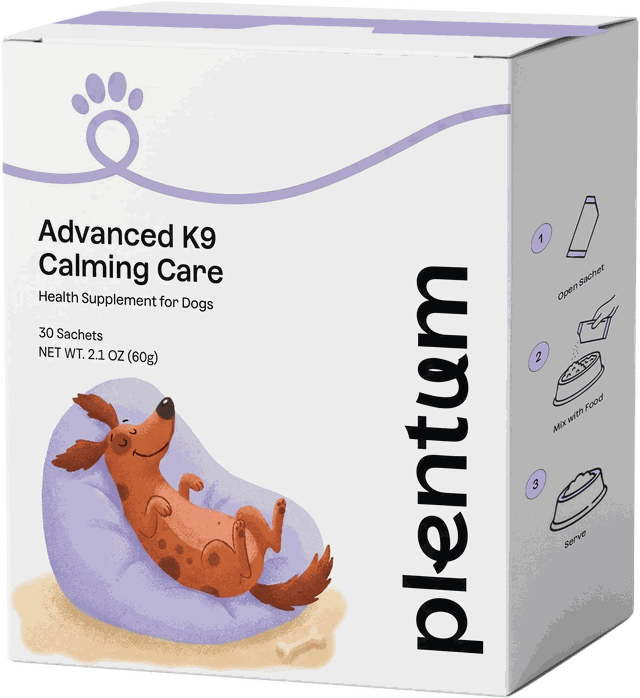
Plentum Advanced K9 Calming Care is melatonin-free and supports a calm, relaxed demeanor during occasional stress.
It contains a postbiotic, and dosing is by weight, so it fits alongside the routine and training above rather than replacing them.
Safe use in pregnant animals or animals intended for breeding has not been established.
Consult your veterinarian before use if your dog takes prescription medication.
This is especially important for monoamine oxidase inhibitors (MAOIs).
For stool changes that show up with stress, read the Dog digestive health and stool guide.
For how daily supplements fit into a routine, see the Dog probiotics and supplements guide.
When should you see a vet or behaviorist?
Behavior changes can have a medical cause, and some signs need an exam.
Call your vet promptly if you notice any of these:
- A sudden change in behavior with no clear trigger
- Pain, limping, or stiffness when your dog moves
- Repeated vomiting, diarrhea, or refusal to eat or drink
- Destructive chewing or self-injury that keeps happening
- New confusion, night restlessness, or fearfulness in a senior or puppy
Sources
- AKC: Separation anxiety (training)
- AKC: Loud noises
- ASPCA: Storm phobia
- Merck: Behavior problems in dogs
- AKC: Should I call my vet
Frequently asked questions
Can a calming supplement replace training?
No.
Supplements can sit alongside training, but they do not teach your dog new habits.
How long does calm training take?
Progress usually comes in small steps over weeks or months of steady practice.
Keep sessions short and consistent.
Is a calm default the same as sit or stay?
No.
A calm default is a settled behavior, such as lying on a mat.
You give sit and stay as cues on purpose.
When should I see a vet about nervous behavior?
See a vet when nervousness starts suddenly or comes with pain, vomiting, or refusal to eat.