





The doorbell rings for the fifth time, your dog is spinning at the door, and there's a bowl of chocolate sitting at nose height. That's October 31 with a dog. Lock up the candy, keep the front door a no-bolt zone, give your dog a quiet room and skip any costume they don't love. Save your vet's number and the nearest emergency clinic's before the night starts.
If your dog gets nervous on Halloween night, our calm trick-or-treat plan walks you through the evening step by step.
If your dog already ate something, start here
- If your dog ate candy, pumpkin, or Halloween scraps, call your vet and follow the guide to what to do next.
- If chocolate was involved, call your vet first and follow the emergency steps in the chocolate guide.
- If peanut butter was involved, call your vet and check the xylitol warning for peanut butter.
Strangers in masks, a doorbell that never stops and an open door all show up on the same evening, and a lot of dogs find that confusing. The 7 tips below follow the night in order, from what you put away in the afternoon to how you wind down.
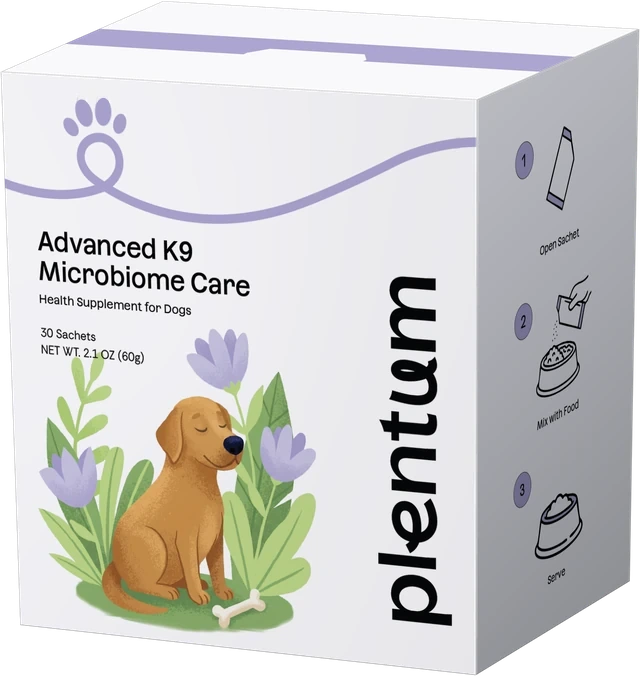
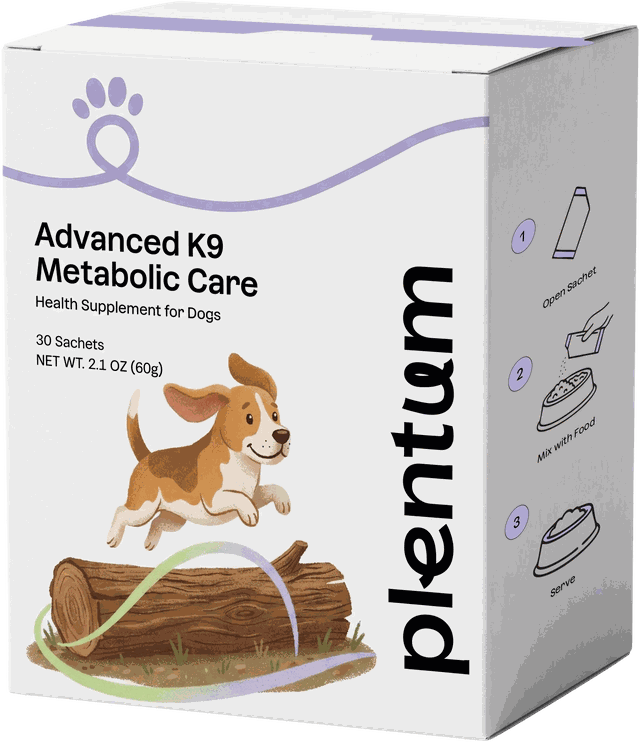
If you give a daily supplement, Plentum Advanced K9 Microbiome Care is a sachet with prebiotics, postbiotics, colostrum and omega-3 that you sprinkle on food. It's an everyday product, not a plan for one loud night, so the steps below matter far more.
- Costumes are optional. Any sign of stress means the costume comes off.
- A quiet room, a long walk before dark and a long-lasting chew make the doorbell much easier to handle.
- Most dogs are happier at home than on the trick-or-treat walk.
Tip 1: Lock up the candy
- Put every piece of candy in sealed containers on a high shelf or in a locked pantry.
- Tell the kids, and the grown-ups, that sharing candy with the dog is a hard no, every time.
- Check the floor after the candy sort, because dropped pieces and wrappers are easy to miss.
The ASPCA flags these as the worst offenders on the Halloween candy list:
| Treat | Why it's dangerous |
|---|---|
| Chocolate | Contains theobromine, which dogs can't metabolize well. Dark and baking chocolate are the worst: a 50-pound dog can get seriously sick from just one ounce of baker's chocolate. |
| Xylitol | Found in sugar-free gum, mints and some peanut butter cups. A single piece can crash a small dog's blood sugar in 10-15 minutes and can trigger liver failure. |
| Raisins and grapes | Can cause acute kidney failure. Scientists still don't know why some dogs are more sensitive than others, so no amount is a safe gamble. |
| Wrappers and lollipop sticks | Can block the gut if swallowed with the candy. |
- Put every piece of candy in a sealed container on a high shelf or in a locked pantry. The counter and the bowl by the door don't count.
Tip 2: Skip the costume if your dog hates it
If you would rather not guess, there is a week-long way to introduce a costume that ends with a sixty-second comfort check.
- Check the fit: your dog should be able to walk, sit, breathe, see and hear normally.
- Avoid small parts, since buttons, beads, sequins and dangling bits are choking hazards.
- Watch for stress signals such as a tucked tail, pinned ears, whale eye, freezing in place or heavy panting.
- Have a backup plan, because a simple festive bandana works for most dogs.
Tip 3: Set up a quiet room before trick-or-treat starts
- Set up early by picking a room far from the front door.
- Tire your dog out first with a long walk or a serious fetch session an hour before dark.
- Offer something that takes 20+ minutes to finish, to keep their brain busy.
- Check in calmly. Visit the room between doorbell rushes with a quiet word and a treat, without making a fuss.
We have a separate guide on how to calm your dog on Halloween. Here are the basics:
- Set up early. Pick a room far from the front door and put down their bed, fresh water and a favorite toy. A white noise machine or low music softens the doorbell and the voices.
- Give them a job. A frozen Kong, a Toppl stuffed with dog-safe peanut butter (check that it's xylitol-free) or a snuffle mat works well. Pick something that takes 20 minutes or more to finish.
Where supplements fit
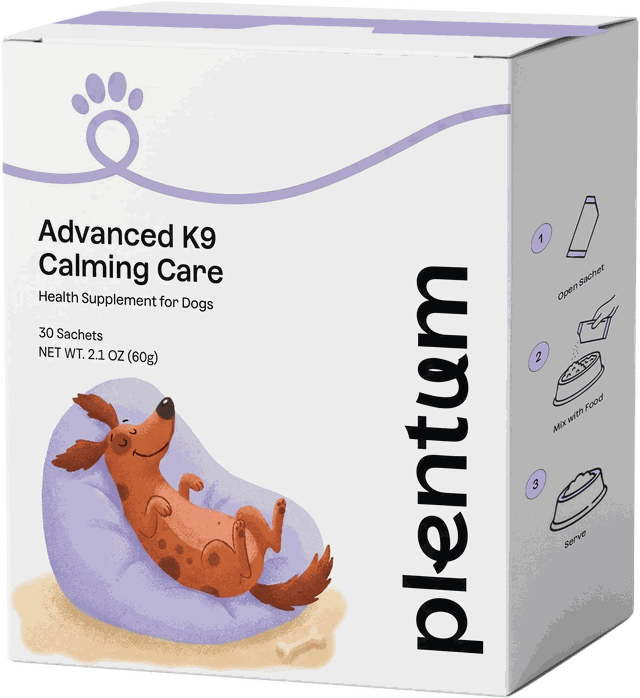
Supplements never replace a quiet room, a tired dog and a closed door. They can be one extra layer for dogs that already struggle with visitors and noise. For dogs that pace at every doorbell, some owners add Calming Care about an hour before the evening starts. Try anything new on an ordinary day first, so you know how your dog responds before Halloween itself.
Check with your vet first if your dog takes an MAOI, SSRI, trazodone or other medication.
Tip 4: Look at your decorations from the floor
- Go flameless. Use battery-operated candles only, because a wagging tail near an open flame is an accident waiting to happen.
- Hide the cords. Tape them to the wall, run them behind furniture or use cord covers. A chewed cord can mean burns or shocks.
- Skip the fake cobwebs. They tangle, they get eaten and they can block the intestines.
- Watch the pumpkins. Carved pumpkins go moldy fast, so keep jack-o'-lanterns and corn decorations out of reach.
Tip 5: Keep the door from becoming an escape route
- Settle your dog in the quiet room before the first kid knocks.
- Check the ID twice: a collar with current tags and a microchip registered with an up-to-date phone number.
- Use a leash for potty breaks, since the front yard is dark and unfamiliar people are walking by.
That door may open 60 times tonight, which gives a startled dog 60 chances to bolt into the dark. Shelters fill up the week after Halloween with dogs who slipped out during trick-or-treat.
If the door is the problem all October rather than only on the 31st, the fix is training: a two-week doorbell settle plan starts by making the chime boring.
- Use the safe room. Your dog should already be settled there before the first kid knocks.
- Check the ID twice. Make sure the collar has current tags and the microchip is registered with an up-to-date phone number. If your dog does get out, that's how they come home.
- Add a gate or a closed door. A baby gate in the hallway puts a second barrier between your dog and the front door.
Tip 6: Most dogs should skip the trick-or-treat walk
- Crowds, masks, flashing lights and dropped candy make the trick-or-treat route hard work for most dogs.
- Choosing to stay home isn't missing out. It's knowing your dog.
- Head home at the first sign of stress.
Crowds, masks, flashing lights and dropped candy make the trick-or-treat route hard work for most dogs. Staying home isn't missing out. It's knowing your dog. If yours is relaxed in busy places and you want to bring them, keep the walk short, use a well-fitted harness and reflective gear, and head home at the first sign of stress.
Tip 7: Give them their own Halloween fun
- Bake or buy dog treats, so your dog gets their own special cookie while the kids sort their candy haul.
- Run a sniffari: hide 10–15 treats around the living room and let them hunt.
- Skip the pie filling, because nutmeg and sugar aren’t good for dogs.
- Pumpkin is fine, pie filling isn't. Plain cooked pumpkin has fiber and vitamins and it's easy on the stomach. Skip the pie filling, since nutmeg and sugar aren't good for dogs.
- Run a sniffari. Hide 10-15 treats around the living room and let them hunt. It costs nothing and uses up 20 minutes of mental energy.
Get ready before the doorbell starts: build the safe room early, lock up the candy and save the vet number. Then the rest of the night can be about the fun part.
Frequently asked questions
What Halloween candy is dangerous for dogs?
Chocolate (especially dark and baking chocolate), anything with xylitol such as sugar-free gum and mints, and raisins are the main dangers. Wrappers and sticks can also cause blockages.
How can I keep my dog calm on Halloween night?
Set up a quiet room far from the front door before dark and add white noise or low music. Give a long walk an hour before trick-or-treat starts, then offer a long-lasting chew or puzzle. Keep your visits to the room calm and low-key.
Should my dog wear a Halloween costume?
Only if your dog is relaxed in it. The costume must let them walk, sit, breathe, see and hear normally, and it shouldn't have small parts. If you see a tucked tail, pinned ears, whale eye or freezing, take it off and try a bandana instead.
Is it safe to take my dog trick-or-treating?
For most dogs, staying home is better. Crowds, masks and dropped candy are stressful and risky. If your dog is relaxed in busy places, keep the walk short, use a harness and reflective gear, and head home at the first sign of stress.