





Quick answer: The best dog food for gut health is a complete, balanced diet kept steady, with small gut-healthy additions such as plain pumpkin, cooked sweet potato, lean turkey, apples and carefully introduced fermented foods. Add one food at a time, watch stool, gas and appetite for several days, and call your vet if digestive changes are persistent, severe or come with weight loss or blood in the stool.
Key takeaways
- Start with a complete and balanced dog food. Gut-friendly toppers are small additions, not a replacement for the main diet.
- Change one variable at a time and watch stool, gas, appetite and energy for several days.
- Plain pumpkin, cooked sweet potato, lean turkey, apples and a little bone broth are simple places to begin. Skip pie filling, onion, garlic and apple cores and seeds.
- Fermented foods such as kefir, plain Greek yogurt and sauerkraut are optional. Use tiny amounts and only if your dog tolerates them.
- A supplement is a routine layer on top of good food, not a replacement for food quality or veterinary care.
Gut-healthy foods: turn the list into a routine
A food list is only useful if it helps owners make a calmer bowl decision and avoid changing too many things at once.

| Question | Plain answer | Next step |
|---|---|---|
| What food is good for dog gut health? | Bland, consistent, digestible food plus appropriate fiber often matters more than a single headline ingredient. | Change one variable at a time and watch stool, gas, appetite, and energy. |
| What are signs of poor gut health in dogs? | Owners often notice stool changes, gas, appetite shifts, and routine sensitivity, but these signs can have many causes. | Use the pattern as a reason to evaluate diet and call a vet for persistent or severe symptoms. |
| Where does fiber fit? | Fiber type and amount can affect stool and gas, so gradual changes matter. | Pair fiber decisions with hydration and steady meals. |
| Where does a supplement fit? | A supplement is a routine layer, not a replacement for food quality or veterinary care. | Choose one that matches the goal and is easy to use daily. |
If you are considering dairy, check the Can Dogs Have Milk? Digestion, Dairy, and Safe Alternatives first because many adult dogs do better with lower-lactose choices or no dairy at all.
If your dog has occasional loose stools, suspected food sensitivities or allergies, or seems unsettled, the answer may lie within the digestive tract. Our guide to the Best Dog Food for Gut Health: How to Compare Options (2026) covers complete diets. The gut is a complex system containing billions of bacteria that play a vital role in Dog Immune Support: What to Look For in a Supplement and overall well-being. When this system is out of balance (dysbiosis), it can affect your dog's health.
Gut-healthy bowl map

Four checks keep a gut-friendly bowl simple:
- Fiber source: add fiber gradually and watch stool response over several days.
- Protein fit: keep protein steady while testing gut-support additions.
- Hydration: water intake changes how fiber and stool quality show up.
- Avoid list: rich scraps and sudden treat changes can undo the gut-friendly plan.
10 practical gut-healthy foods for dogs
These are foods to improve dog gut health gradually, as small toppers for a complete diet. Many human foods are safe in small amounts, but some are toxic, so check the American Kennel Club (AKC) and ASPCA lists of human foods dogs can and cannot eat before you add anything new. Introduce one at a time, in small amounts, and measure portions so calories and fiber do not jump too fast. For help with portions, see Dog Portion Control: How Much Should Your Dog Actually Eat?

1. Pumpkin: the fiber-rich regulator
Pumpkin is a staple for supporting digestive health. Rich in soluble fiber and pectin, it helps maintain normal stool consistency. It can help firm up loose stools by absorbing excess water and supports regularity for dogs dealing with occasional constipation. The fermentation of fiber in pumpkin also produces fatty acids that nourish the cells lining the intestine.
- Quick tip: use plain canned pumpkin, not pie filling, as pie filling often contains sugars or xylitol, which is toxic to dogs. Our guide to Canned or Fresh? How to Use Pumpkin for Dogs the Right Way has the details.
2. Sweet potato: the energy-dense prebiotic
Sweet potatoes are packed with complex carbohydrates and beta-carotene. They supply prebiotic fiber for the bacteria living in your dog's colon (see What Prebiotics Actually Do in Your Dog's Gut). With a higher calorie count than pumpkin, they need measured portions, especially for dogs that must maintain a healthy weight. For the bigger picture, read Dog Gut Health: Why Your Pup's Digestion Matters.
3. Bone broth: gentle support for gut integrity
What Bone Broth Actually Does for Dogs is often praised for supporting the lining of the digestive tract. Simmering bones for over 24 hours releases collagen and gelatin, which can help coat and maintain the comfort of the gut wall. This supports the structural integrity of the gut lining and helps maintain a healthy barrier function.
- Recipe note: ensure the broth is free from onions and garlic, which are unsafe for dogs.

4. Green tripe: the enzymatic powerhouse
"Green" tripe is the unbleached, nutrient-dense stomach lining of ruminant animals. Unlike the white tripe found in grocery stores, green tripe contains naturally occurring digestive enzymes (like lipase and amylase) and beneficial bacteria like Lactobacillus acidophilus. These components support efficient nutrient absorption and help maintain a healthy pH balance in the gut, creating an environment that is unfavorable to harmful bacteria.
5. Fermented vegetables (sauerkraut)
Fermented vegetables like sauerkraut are gaining attention for their "postbiotic" content. These are the beneficial compounds produced during fermentation. Sauerkraut offers naturally occurring metabolites and B-vitamins. A small amount of plain, refrigerated sauerkraut can introduce a variety of beneficial cultures to the gut. For more options, see Natural Probiotic Foods for Dogs: Kefir, Yogurt & Fermented Options and Fermented Foods for Dogs: Kefir, Bone Broth, and the Gut Microbiome.
6. Greek yogurt and kefir: the dairy defense
While some dogs are sensitive to lactose, fermented dairy products like plain Greek yogurt and kefir are often better tolerated because the fermentation process breaks down much of the lactose. These foods provide beneficial cultures that help maintain a balanced microbiome and support skin health from the inside out.

7. Lean turkey: the calming protein
Lean, boiled turkey is easily digestible, making it a gentle protein source for dogs with sensitive stomachs. It is also a natural source of L-tryptophan. Since a significant portion of serotonin is produced in the gut, this amino acid may help support the gut-brain connection and promote a sense of calm. Read more in The Gut-Brain Axis in Dogs.
8. Blueberries: the brain-gut antioxidant
Blueberries are a functional food that benefits the connection between the gut and the brain. Rich in polyphenols, they act as antioxidants to help reduce oxidative stress. These compounds support cognitive health and may help maintain healthy brain function as dogs age.
9. Chia seeds: the mucilage manufacturer
Chia seeds are hydrophilic, absorbing a great deal of water relative to their weight. When soaked, they form a gel-like substance (mucilage) with a texture that some dogs tolerate as a gentle fiber source. This makes them a gentle option for supporting digestive comfort. Unlike flax seeds, chia seeds can be digested without grinding.
10. Apples: the pectin source
Apples are a great source of pectin, a gel-forming dietary fiber. In the gut, pectin contributes soluble fiber that may support normal stool texture as part of a complete diet. Apples also contain quercetin, an antioxidant; keep portions modest and watch tolerance in dogs with sensitivities. Always remove seeds and the core before feeding.
Quick reference: food types, prep and watch-outs
| Food Type | Best Use | Prep Cue | Watch-Out |
|---|---|---|---|
| Pumpkin or sweet potato | Fiber-forward meal support | Use plain, cooked, unsweetened portions. | Too much at once can change stool texture. |
| Lean turkey or simple protein | Gentle protein rotation when appropriate | Keep it plain and avoid seasoning. | Do not use as a long-term complete diet by itself. |
| Fermented foods | Optional variety for dogs that tolerate them | Use tiny amounts and avoid onion, garlic, salt-heavy, or sweetened versions. | Not every dog tolerates dairy or fermented vegetables. |
| Blueberries, apples, or chia | Small add-ins for fiber or variety | Serve in small, dog-safe pieces and introduce gradually. | Avoid apple cores and seeds; do not stack many new add-ins at once. |
| Daily Probiotics, Prebiotics, and Postbiotics for Dogs: What Is the Difference? | Routine support beyond individual foods | Give consistently with a meal or as directed on the label. | Use as support, not as a substitute for complete food or veterinary care. |
Clinical evidence
| Publication | Year | n-size | Primary Endpoint | Result | Source |
|---|---|---|---|---|---|
| No dog trials of these specific foods are cited in this guide. The sources below are nutrition guidance and a review of dietary fiber and companion-animal gut health. | |||||
Food to gut to stool: the daily pathway
- Food consistency. A steady diet gives the gut fewer moving parts to interpret. Start with foods your dog already tolerates, then introduce one new food at a time.
- Fiber and fermentation. Fiber can influence stool texture and microbial activity, but the amount and pace matter. Sudden changes make it harder to know what helped or bothered your dog.
- Daily routine support. Regular meal times, steady portions and fresh water make each change easier to read.
- Stool and comfort signals. Check stool, gas, appetite and energy each day. The Dog Stool Quality Chart: What Firm, Soft, and Loose Stool Can Mean helps you score what you see.
If the stool score stays at 5 or above, see our guide to firming up loose stool before you add anything new.
Homemade dog food balance: 7 practical steps (2026)
Whole foods can be useful toppers, but they are not always consistent from bowl to bowl. The amount of fiber, fat, and fermentation varies by ingredient, prep method, and how your dog tolerates changes. Our guide to Homemade Dog Food Balance: 7 Practical Steps (2026) shows how to keep a home-prepared bowl complete.
For pet parents who want a steadier routine, all in one dog supplements can sit alongside a complete diet. Plentum uses postbiotic + prebiotic daily gut support with colostrum and omega-3s, without asking owners to compare live-culture counts or CFUs.
Where supplements fit
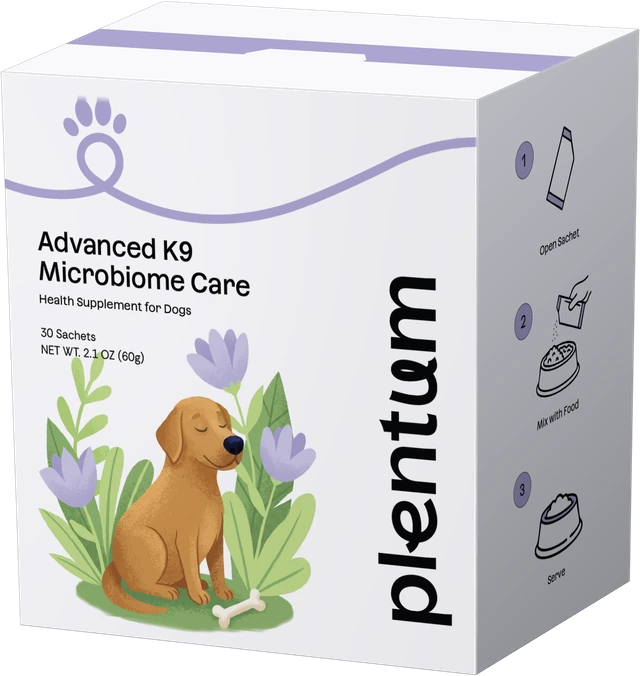
If the food routine is mostly stable but your dog still needs daily gut-support consistency, a powder supplement is one routine layer to compare. Plentum Advanced K9 Microbiome Care is a daily sachet that combines prebiotic fiber, a postbiotic, colostrum, omega-3, L-glutamine, licorice, zinc, selenium and vitamin E, mixed into your dog's food each day. It is not a live-culture probiotic or CFU product, and it does not replace a complete diet or veterinary care.
Supplement, not a medicine. Ask your vet if your dog has a health condition or takes medication.
Food-first supplement questions people ask
This page keeps food as the foundation while answering when a supplement makes sense after diet basics are in place.
- Start with complete food, slow transitions, hydration, and consistent portions.
- Use food additions carefully so calories and fiber do not jump too fast.
- Treat supplements as a routine layer, not a replacement for diagnosis or complete nutrition.
| Question readers ask | Plain answer |
|---|---|
| Do dog supplements actually work? | They can support a consistent routine, but they work best when food, treats, meal speed, and hydration are already steady. |
| Do dogs need supplements if they eat well? | Many do not. A supplement is more relevant when the dog has repeated mild digestive or skin/coat routine needs. |
| What are the big 3 supplement angles? | Gut support, omega-3 support, and targeted needs like joint or skin/coat support. The right answer depends on the dog. |
| Where does Plentum fit? | Plentum pairs a daily gut-support formula with food-first care: postbiotic support, prebiotic/inulin, colostrum, omega-3, and supportive nutrients. |
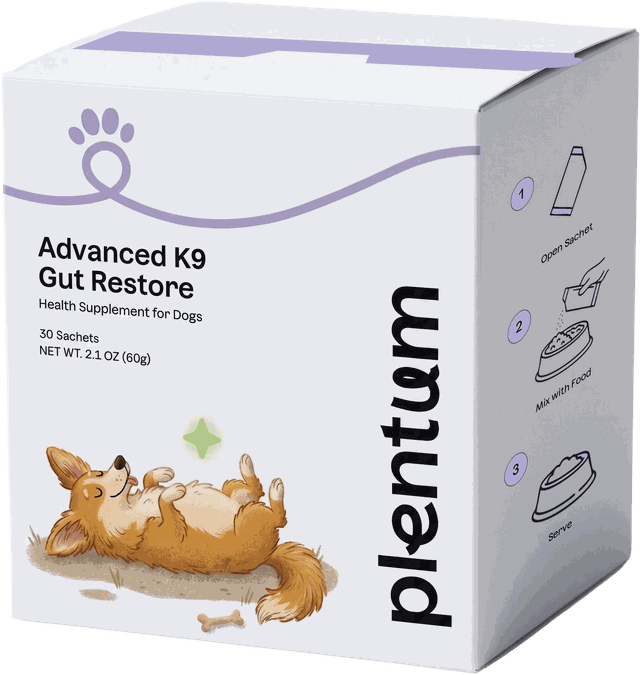
If a diet change leaves stools loose, a short gut reset with Gut Restore can run alongside the food plan for 30 to 60 days, with daily support continuing on Microbiome Care.
Plentum fits when a dog parent wants food-first gut support plus a simple daily supplement routine without stacking several separate products. For next steps, see Dog Gas Remedies: 7 Fast Practical Fixes (2026) and Best Probiotic for Dogs in 2026: A Vet-Aligned Guide.
Conclusion
Good gut care starts in the bowl: a complete diet, small and gradual additions, steady water and a clear record of how your dog responds. Pick one food from the list, give it several days, and keep what works. If stool changes persist or come with other signs, call your vet before adding anything else. For more on fiber and gut support, see L-Glutamine for Dogs: How It Supports the Gut Lining, Inulin & Prebiotic Fiber for Dogs: Why It Matters and, for a common bland-food question, Can Dogs Eat Rice?
Gut-healthy food questions, answered
What foods are good for dogs' gut health?
The strongest evidence points to fiber-rich vegetables and fruits such as pumpkin, sweet potato, apples and blueberries, plus gentle proteins and, in small amounts, fermented foods like kefir or plain fermented vegetables. Variety across weeks matters more than any single superfood.
Is pumpkin good for dogs' gut health?
Yes. Pumpkin is the classic canine gut food because its soluble fiber helps support normal stool consistency and regularity. Serve it plain and cooked, never pie filling: one to four tablespoons per meal depending on your dog's size.
Are fermented foods safe for dogs?
In small amounts, yes. Plain kefir and simple fermented vegetables can support a dog's gut the way they support ours. Introduce them slowly, because a sudden flood of new bacteria can cause gas, and skip anything seasoned with onion or garlic, which are toxic to dogs.
What naturally settles a dog's stomach?
For mild upset, the reliable natural tools are a short bland diet of boiled chicken and rice, a spoonful of plain pumpkin, and plenty of water. If vomiting lasts more than a day, blood appears, or your dog seems painful, that is a veterinarian conversation, not a kitchen one.
Frequently asked questions
What can I feed my dog for gut health?
Begin with a complete and balanced dog food, then add one small topper at a time, such as plain cooked pumpkin, cooked sweet potato, lean boiled turkey or a few apple pieces. Watch stool, gas, appetite and energy for several days before adding another food.
How can I improve my dog's gut health?
Keep the diet consistent, make changes gradually, give plenty of water and avoid rich scraps and sudden treat changes. Add fiber slowly and track stool quality. If problems persist, ask your vet to look for an underlying cause.
What foods are good for dogs' digestion?
Bland, consistent, digestible food plus an appropriate amount of fiber often matters more than any single ingredient. Pumpkin, sweet potato and lean protein are common choices. Dogs with ongoing digestive problems need a vet check rather than more food experiments.
What foods or ingredients support better dog gut health balance?
Soluble fiber from pumpkin and apples, prebiotic fiber from sweet potato, and small amounts of plain fermented foods can all support a balanced gut. Introduce each one slowly. Not every dog tolerates dairy or fermented vegetables.
What are the best pet foods for digestive health support?
A complete and balanced diet that suits your dog's age, size and health is the foundation, and WSAVA nutrition guidance is a good place to learn what to look for. Gut-friendly toppers work as small extras on top of that food.
Sources
| Topic | Evidence-based takeaway | Source |
|---|---|---|
| Complete and balanced diet first | Gut-friendly toppers work best as small additions to a complete diet, not as a replacement for balanced dog food. | WSAVA Global Nutrition Toolkit |
| Fiber and stool quality | Soluble and insoluble fibers can influence stool consistency, microbiome activity, and satiety, but individual tolerance varies. | Review on dietary fiber and companion-animal gut health |
| When to ask the vet | Persistent diarrhea, vomiting, weight loss, pancreatitis, kidney disease, diabetes, allergies, or prescription diets should be handled with veterinary guidance before changing foods. | AVMA pet nutrition guidance |
- American Kennel Club: Foods dogs can and cannot eat
- ASPCA Animal Poison Control: People foods to avoid feeding your pets
- Big Dog Pet Foods (2025): The Impact of Diet on the Canine Microbiome
- Wagbar (2025): Gut Health for Dogs: Probiotics, Pumpkin, and Science
- Nature's Animals (2025): Sweet Potatoes vs. Pumpkin: Which is Best for Your Dog?
Supplement, not a medicine. Ask your vet if your dog has a health condition or takes medication. These statements have not been evaluated by the Food and Drug Administration. This product is not intended to diagnose, treat, cure, or prevent any disease.