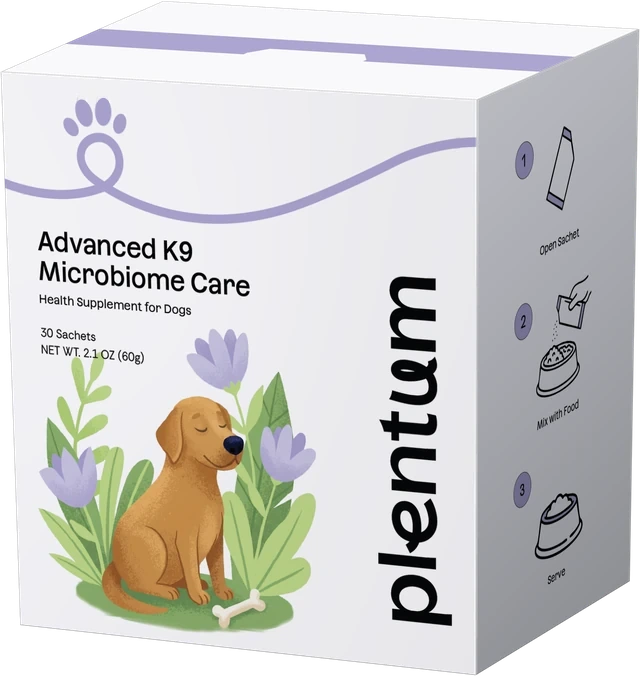

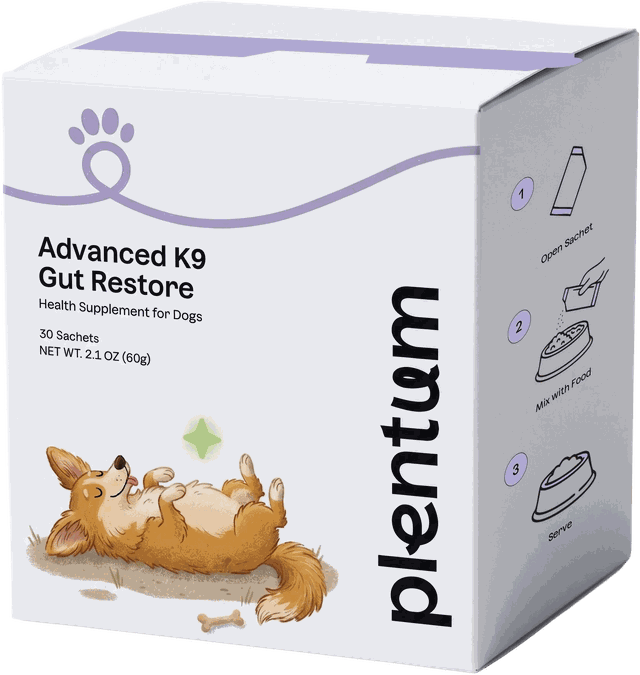

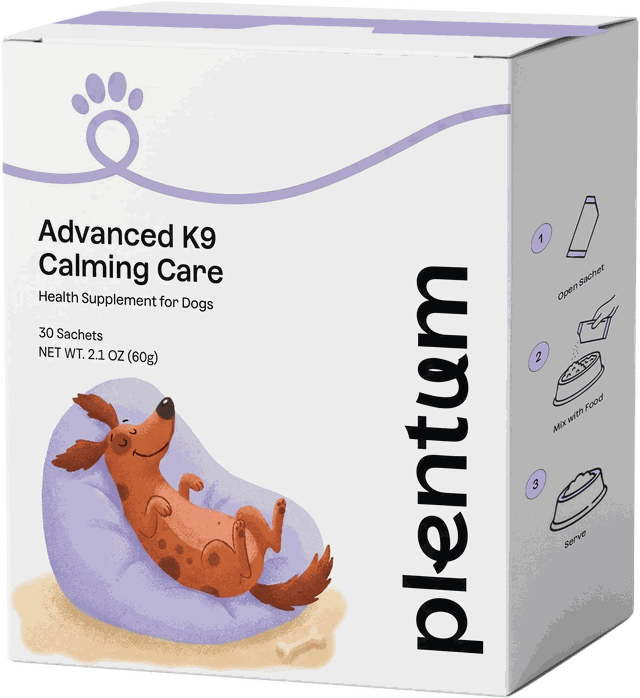

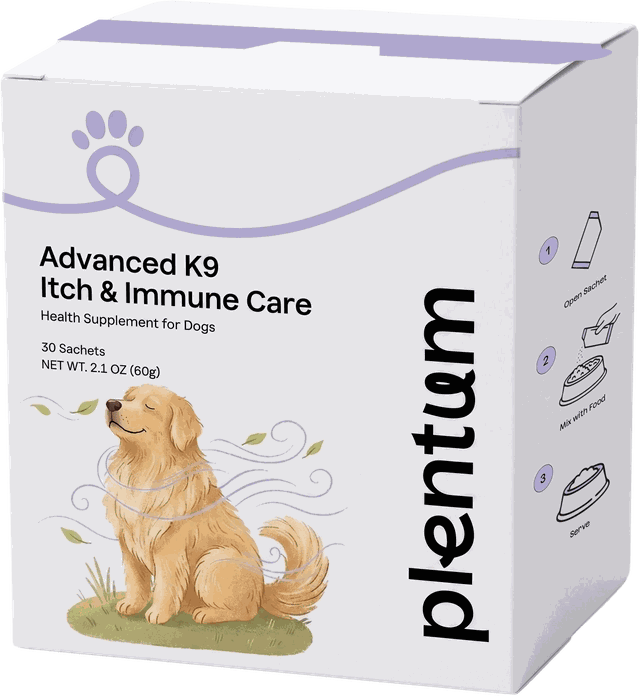

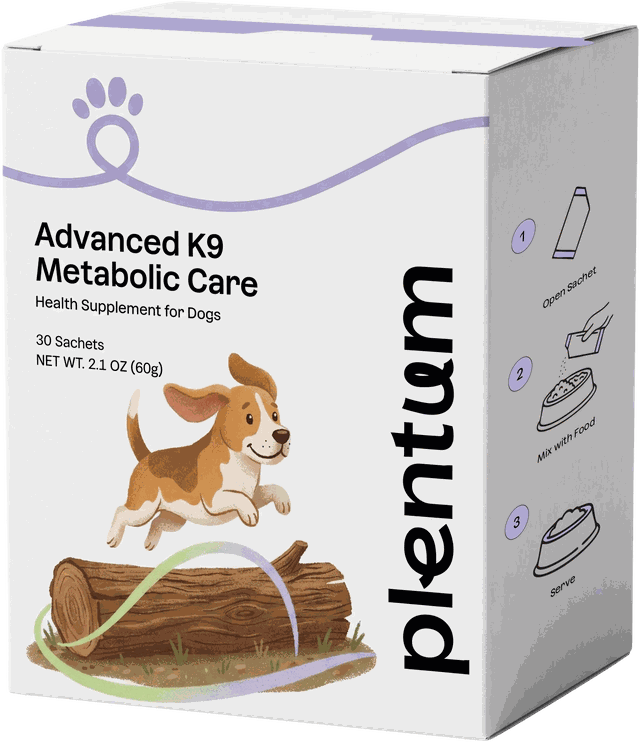


Your dog is getting gray around the muzzle, and supplement labels seem to promise more years.
No supplement can promise that.
A good longevity supplement supports daily basics such as digestion, skin, and nutrient balance.
Look for named ingredients, dog-specific dosing, and modest claims.
Vet care, movement, food quality, and body-condition checks do the heavy lifting.
- A longevity supplement for dogs supports daily basics but does not guarantee a lifespan.
- Gut health is a common starting point in longevity conversations, so it is worth looking at first.
- Vet care, movement, food quality and body-condition checks matter more than any single product.
Why does aging start in the gut?
| Compare | What to check |
|---|---|
| Diet | Complete nutrition and measured portions |
| Activity | Movement suited to your dog |
| Supplement | Evidence for a specific ingredient and goal |

Researchers describe a pattern in aging bodies called inflammaging, which is chronic, low-grade inflammation.
Some link it to cognitive decline and skin changes.
Those links are still under investigation in dogs, so treat them as working ideas and not settled facts.
Gut health is a common starting point in longevity conversations.
Discuss it with your vet. It doesn't promise that a product will change how your dog ages.
What is the "postbiotic advantage" for longevity?
- Postbiotics are not alive, so the question of whether live bacteria survived shipping, heat or stomach acid does not apply to them.
- Short-chain fatty acids such as butyrate are made by gut microbes and are a main energy source for the cells lining the colon.
- Early canine research on postbiotics is limited, so treat it as a promising direction rather than a finished answer, and read each study against its sample size and duration.
- Stability. Postbiotics aren't alive, so the question of whether live bacteria survived shipping, heat or stomach acid doesn't apply to them. Still follow the label for storage advice.
- Direct action. Short-chain fatty acids such as butyrate are made by gut microbes and are a main energy source for the cells lining the colon. Some owners notice changes in stool and coat over a few weeks, though results vary from dog to dog.
- Evidence direction. Early canine research on postbiotics is limited. Read each study against its sample size and duration, and see it as a promising direction rather than a finished answer.
What else should a longevity supplement include?
- Named ingredients with amounts, so you can compare products.
- Dog-specific dosing. Doses should follow your dog's weight and the label directions.
- Claims that stay modest. A label that promises more years is overpromising, and no supplement can keep that promise.
- A plan for review. Write down the start date, the product and any changes, then review them with your vet.
A longevity plan starts with a balanced diet, healthy weight, regular movement, and dental care.
Your vet can track changes over time.
Supplements sit on top of that foundation.
Some longevity supplements add plant ingredients such as curcumin from turmeric or boswellia.
Read the label for each ingredient's amount. Be wary of claims that two ingredients double the effect.
More ingredients aren't automatically better.
- Named ingredients with amounts. They let you compare products.
- Modest claims. A label that promises more years is overpromising. No supplement can keep that promise.
How is this different from a multivitamin?
- A standard multivitamin handles maintenance, not support, by topping off vitamins such as A, D and E.
- A multivitamin can be useful for dogs on homemade diets or on low-quality kibble, because it fills gaps in the diet.
- A longevity-focused supplement aims at a wider set of daily foundations. It does a different job from a multivitamin, so the two are not interchangeable.
A standard multivitamin adds vitamins such as A, D, and E.
It may fill nutritional gaps in homemade diets or other diets that lack needed nutrients.
A longevity-focused supplement aims at a wider set of daily foundations.
It does a different job from a multivitamin, so the two aren't interchangeable.
Where supplements fit
Supplements sit alongside food, movement and vet checks.
They don't replace a diagnosis or the treatment your vet recommends.
Ask your vet if your dog has a health condition or takes medication.
Your dog's healthspan starts now
The research is still early, but the direction is clear enough to plan around.
A healthy gut is one part of a long healthspan, alongside food, movement and vet care.
A daily routine that covers all of those is the best place to start.
A standard probiotic or multivitamin alone is unlikely to cover every part of the picture.
A longevity-focused supplement can be one piece of a broader plan.
When considering a longevity supplement for dogs, check its ingredients and weight-based dose.
Agree on a review date with your vet.
Primary veterinary reference
Use this guide alongside the WSAVA Global Nutrition Guidelines.
Follow advice from the vet managing your dog's care.
Frequently asked questions
What supplements extend dog lifespan and quality of life?
No pet longevity supplement can promise a longer life.
Supplements may support daily basics such as digestion, skin, and nutrient balance.
Quality of life depends most on vet care, movement, food quality, and regular body-condition checks.
What's the best supplement for dog gut health right now?
There's no single best choice for every dog. Look for named ingredients, clear doses and third-party testing.
What dog supplement is best for long-term health support?
A long-term plan usually includes a balanced diet, regular movement, dental care, and vet check-ins.
Add a supplement if your vet agrees.
Keep a dated log so you can judge changes over months, not days.